
Digital Sovereignty Challenges in a Cloud-First World
February 2, 2026
Agentic Browsers: Redefining the Future of Web Browsing
February 16, 2026
10 AI Agent Use Cases Powering Enterprise Automation in 2026
February 9, 2026
Enterprise automation is evolving rapidly. Organizations today manage complex workflows, large data volumes, and distributed teams. Traditional rule-based tools struggle to keep up with this scale and complexity. This is why AI agent use cases are becoming essential for modern enterprises. AI agents help automate work across departments, systems, and workplace communication channels while maintaining accuracy and control.
In 2026, companies investing in enterprise AI automation will be better prepared to scale operations, reduce costs, and improve productivity. This blog explores ten proven ways AI agents are powering AI-powered enterprise operations across industries.
What Are AI Agents?
AI agents are intelligent software systems that perform tasks independently to achieve defined goals. Unlike traditional automation, AI agents can understand context, make decisions, and work across multiple enterprise systems.
They can read emails, access business applications, analyze data, and follow company policies. AI agents also learn from previous actions and improve over time. This makes them well suited for enterprise workflow automation, where processes are complex and continuously changing.
In simple terms, AI agents act like digital team members that support humans by handling repetitive and time-consuming work.
1. Customer Support Automation
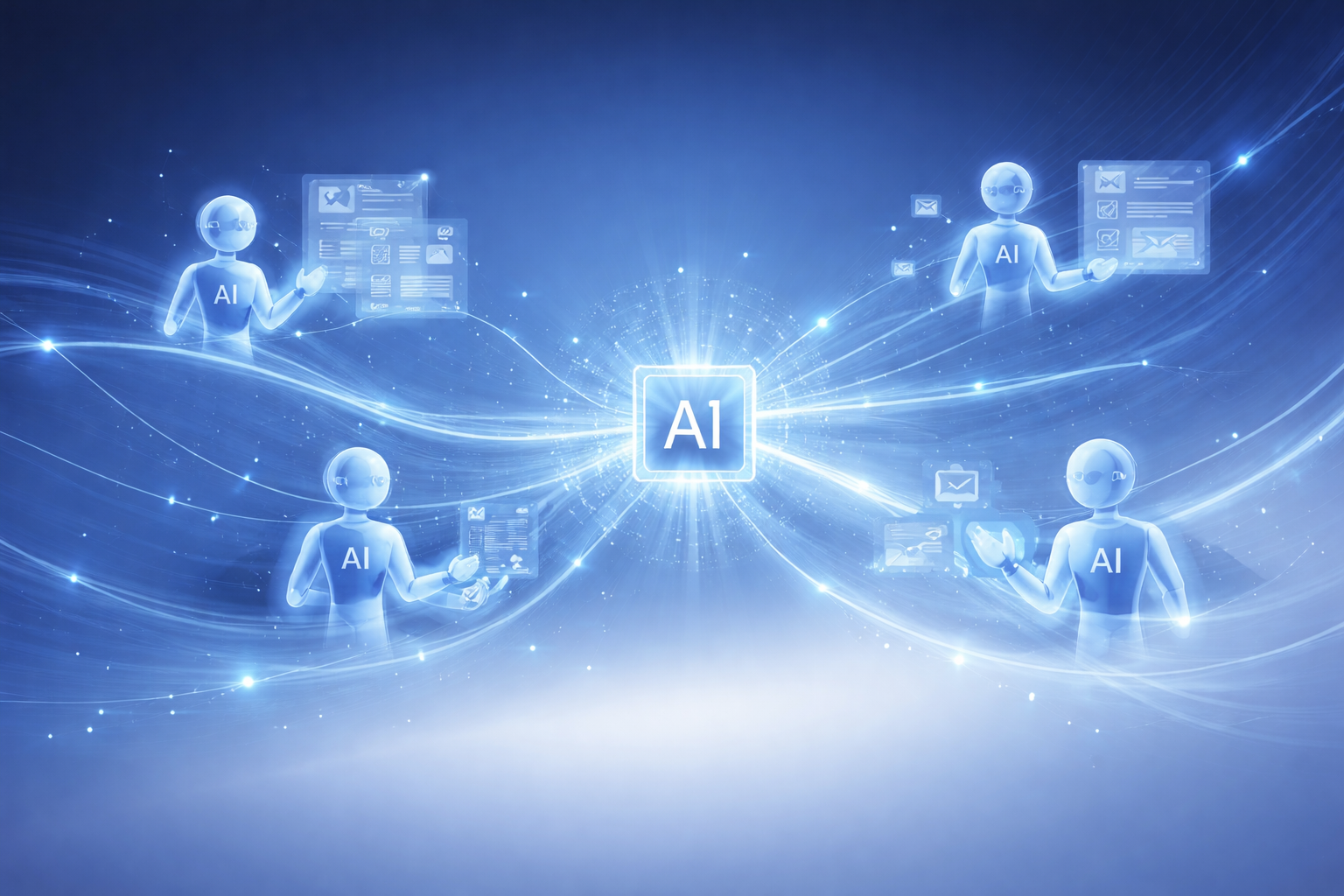
Customer support teams deal with high volumes of repetitive requests such as order tracking, account updates, and basic troubleshooting. At enterprise scale, this leads to slow response times and inconsistent service. AI agents improve customer support by reading incoming tickets, understanding intent, and pulling context from CRM systems and an enterprise email solution . They resolve routine issues automatically and escalate complex or sensitive cases to human agents. This ensures fast responses while maintaining quality service. Enterprises benefit from reduced support costs and improved customer satisfaction.
Capabilities
- Ticket triaging and prioritization
- Context retrieval from CRM and email systems
- Automated replies for common issues
- Intelligent escalation to human agents
2. Sales and Marketing Automation
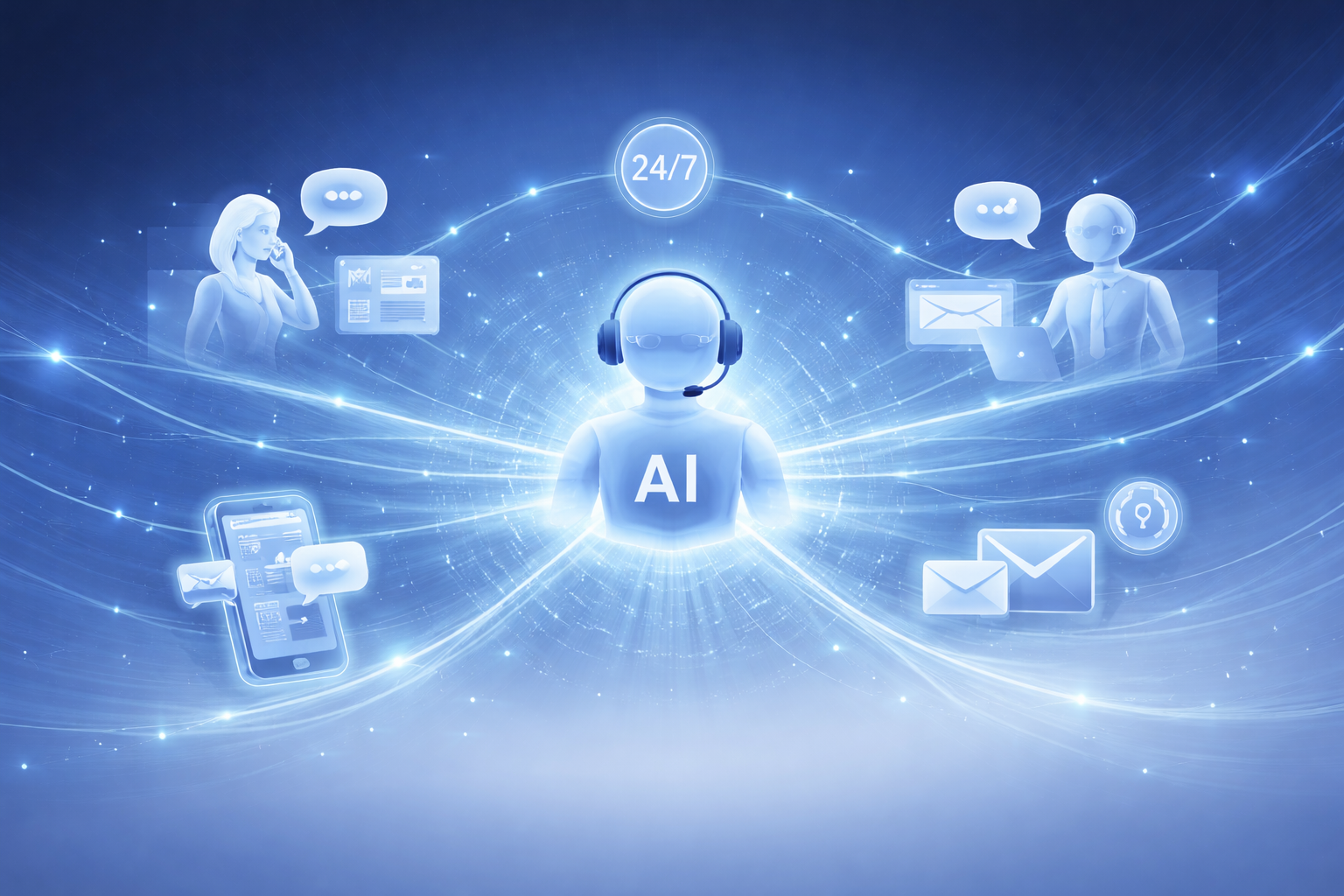
Sales and marketing teams often lose time to manual tasks that do not directly generate revenue. AI agents automate lead qualification, content creation, personalized outreach, and campaign reporting. They analyze engagement signals across websites, email, and CRM systems to identify high-quality prospects. Marketing agents also generate performance summaries by pulling data from multiple analytics tools. This enables teams to focus on strategy and customer engagement. These AI agents for business support faster growth without additional headcount.
Capabilities
- Lead qualification and scoring
- Personalized outreach creation
- Campaign performance reporting
- Competitive and market insight analysis
3. Finance and Banking Automation
Finance teams operate in environments where speed, accuracy, and compliance are critical. Manual invoice processing and fraud detection slow operations and increase risk. AI agents automate invoice reconciliation, monitor transactions, and support loan risk assessment across finance systems. In banking, agents detect suspicious activity in real time while reducing false positives. They also maintain audit-ready records for compliance. This approach strengthens enterprise AI automation in finance.
Capabilities
- Invoice reconciliation
- Fraud and risk monitoring
- Loan and credit risk assessment
- Compliance and audit reporting
4. Human Resources Automation
HR teams handle heavy workloads during hiring, onboarding, and employee support cycles. AI agents automate resume screening, interview scheduling, and onboarding workflows. They also respond to employee questions related to policies and benefits through integrated workplace communication and an enterprise email solution. This ensures consistent communication across teams and locations. HR teams reduce manual effort and improve employee experience. They can focus more on people development and culture.
Capabilities
- Resume screening and ranking
- Interview scheduling
- Onboarding workflow coordination
- Employee self-service support
5. Legal Contract Automation
Legal teams are under pressure to review more contracts without increasing risk. Manual contract review is slow and difficult to scale. AI agents analyze contracts by comparing them against approved templates and company policies. They highlight risky clauses, missing terms, and non-standard language that requires legal review. Agents also track changes across contract versions. This improves consistency and reduces review time.
Capabilities
- Contract review and comparison
- Risky clause identification
- Version change tracking
- Compliance verification
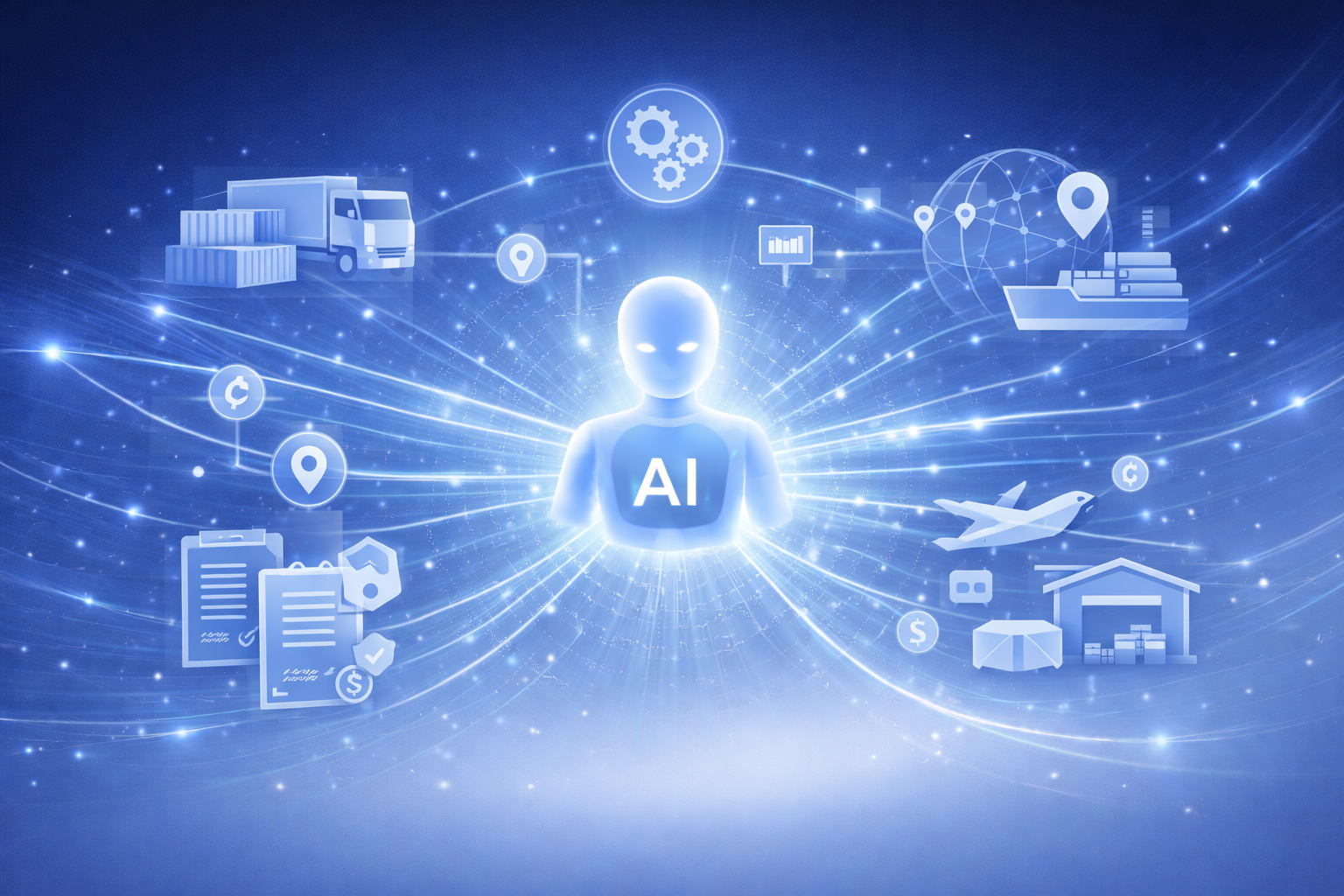
6. Supply Chain and Logistics Automation
Supply chains involve many vendors, systems, and external risks. AI agents monitor inventory levels, supplier performance, and delivery conditions in real time. When shortages or delays are detected, agents trigger reorder workflows or suggest alternate suppliers. Logistics agents optimize routes using traffic and weather data. Predictive maintenance agents analyze equipment data to prevent failures. These autonomous AI systems improve operational stability.
Capabilities
- Inventory monitoring
- Supplier performance analysis
- Route optimization
- Predictive maintenance scheduling
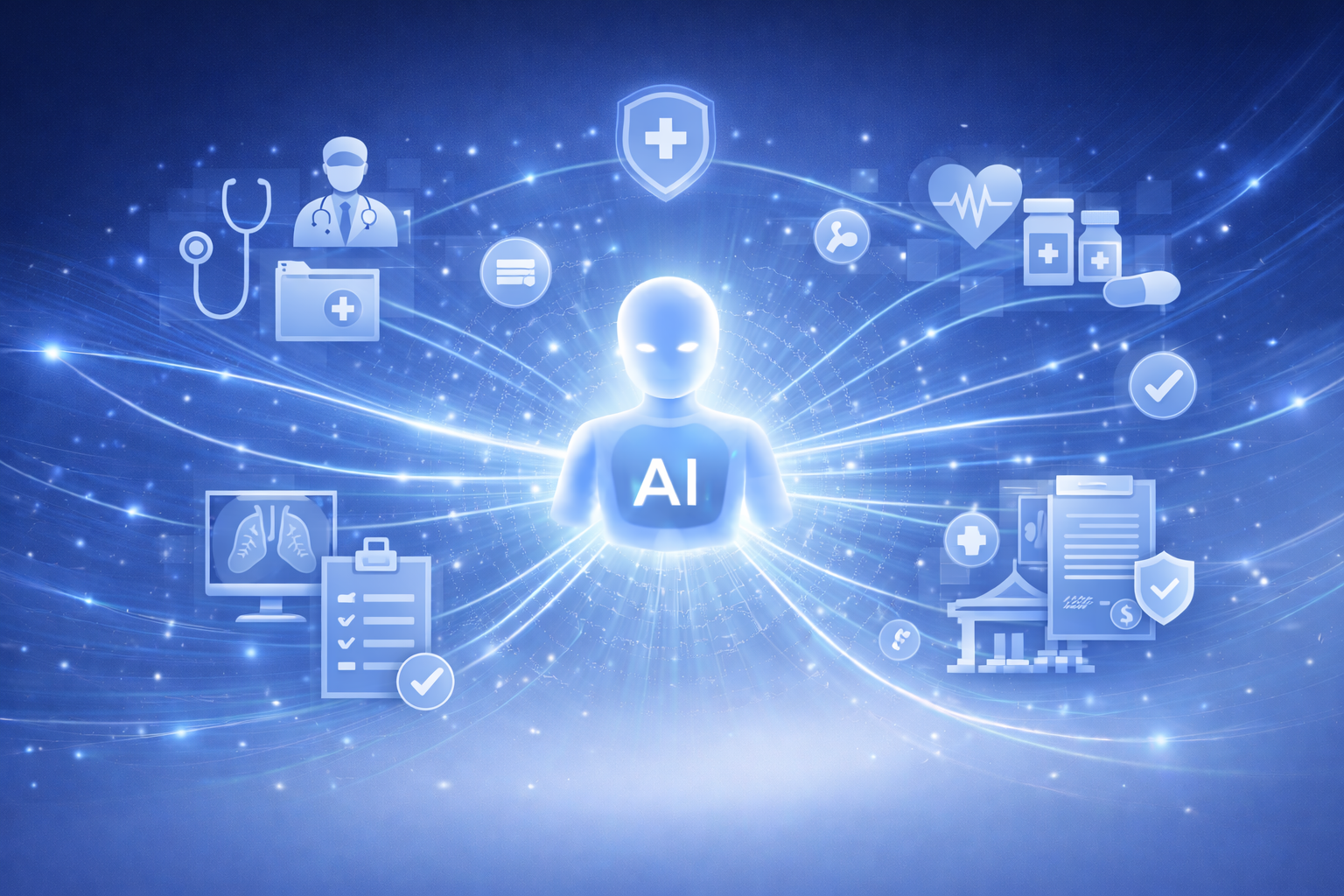
7. Healthcare Operations Automation
Healthcare organizations face heavy administrative workloads that limit patient care. AI agents automate appointment scheduling, billing, and clinical documentation support. Scheduling agents reduce patient wait times across providers and locations. Billing agents verify insurance and follow up on claims to reduce errors. Documentation agents generate draft notes for clinician review. These AI agent use cases improve efficiency without affecting medical decisions.
Capabilities
- Appointment scheduling
- Medical billing and claims processing
- Clinical documentation support
- Research data analysis
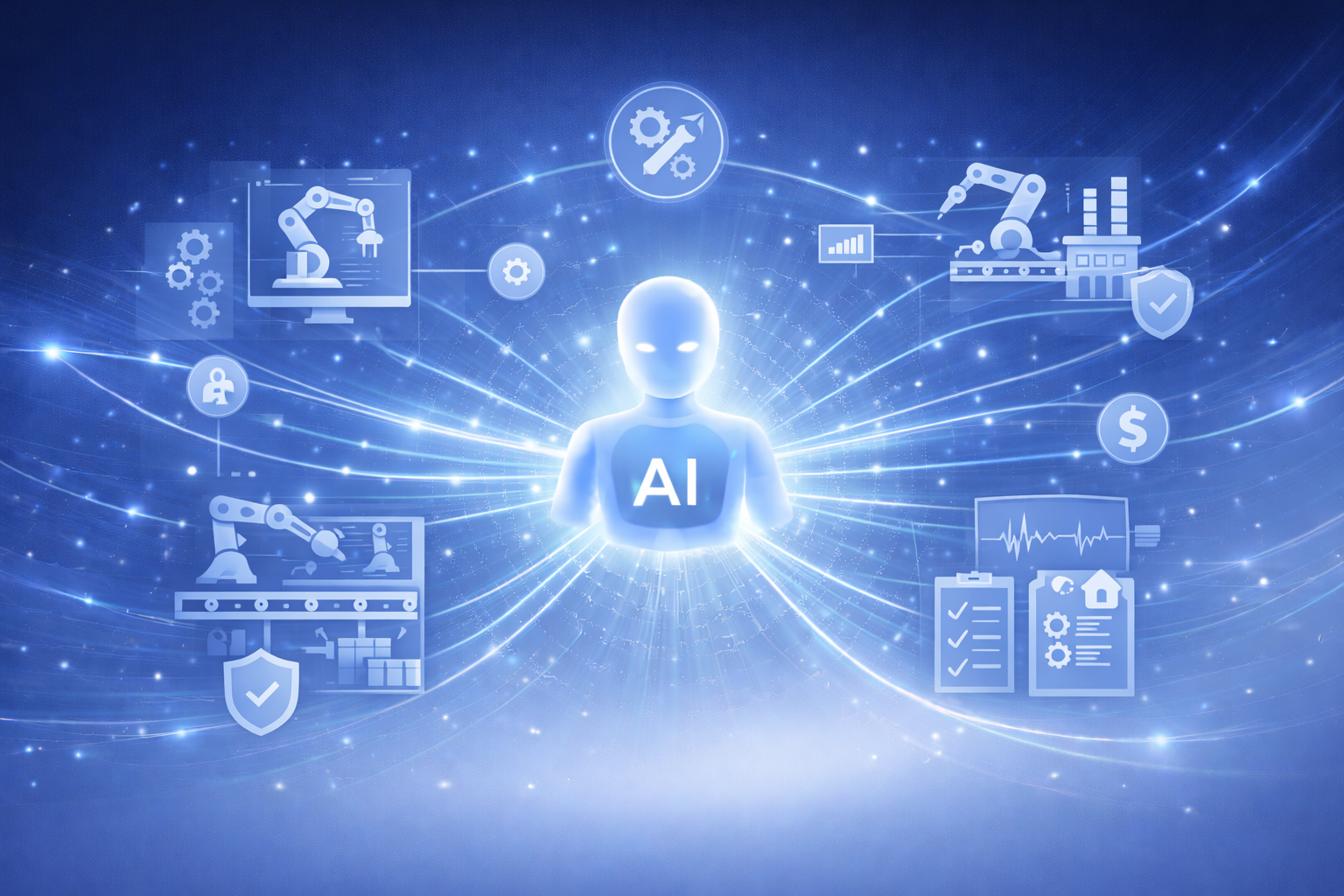
8. Manufacturing Operations Automation
Manufacturing environments generate continuous data from machines and inspections. AI agents analyze this data to detect early signs of equipment failure. They support quality checks by identifying defects and ensuring standards are met. Inventory agents ensure materials are available across production lines. This reduces downtime and improves safety. Manufacturers benefit from stronger AI-powered enterprise operations.
Capabilities
- Equipment monitoring
- Quality inspection analysis
- Inventory management
- Supply risk detection
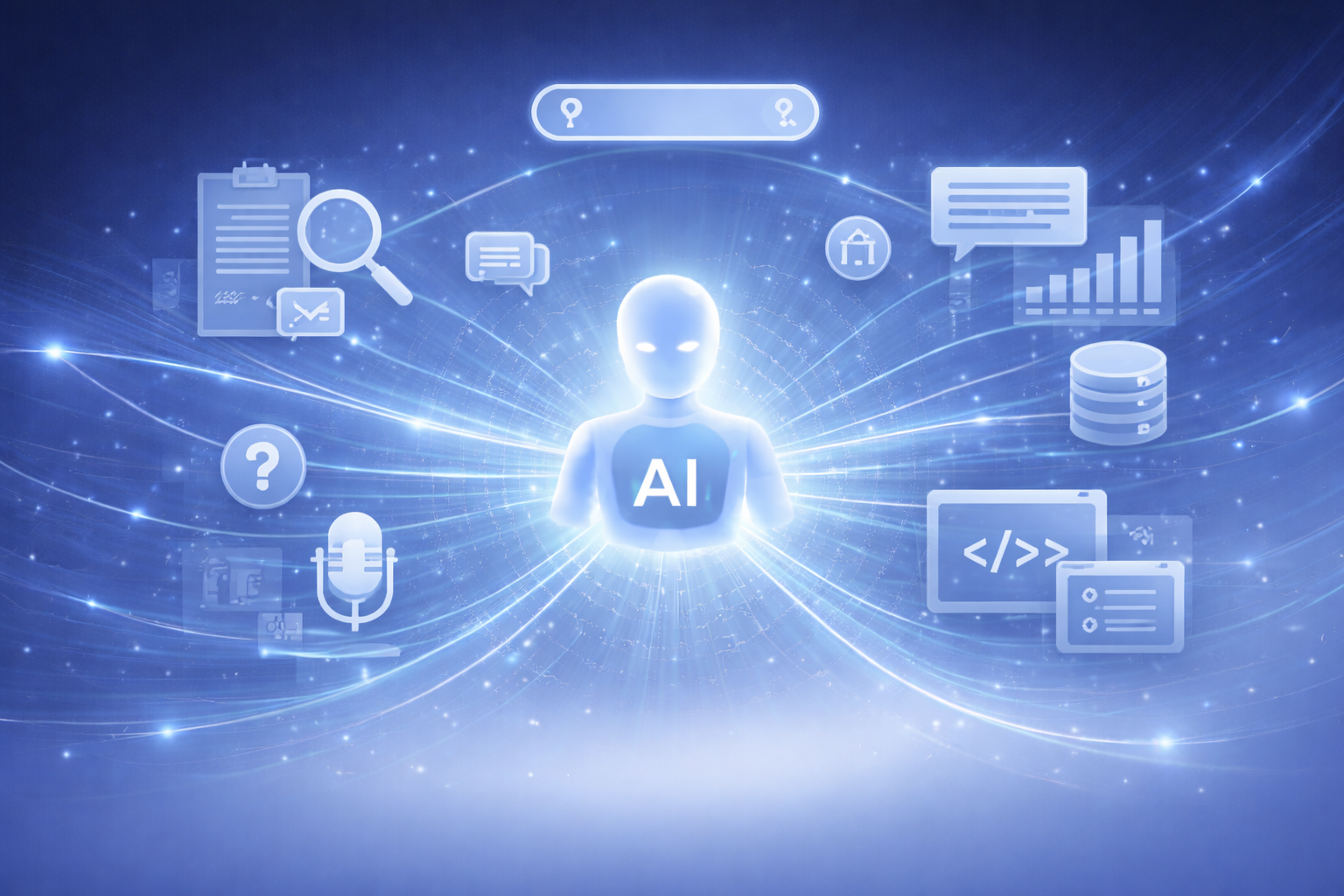
9. Data Access and Natural Language Queries
Enterprise data is often hard for non-technical users to access. AI agents allow employees to ask questions in simple language and receive instant insights. The agent converts questions into queries across data systems and presents results clearly. This reduces dependency on dashboards and analysts. More teams make faster, data-driven decisions through enterprise workflow automation.
Capabilities
- Natural language data queries
- Cross-system data access
- Insight summarization
- Business-friendly reporting
10. Cross-System Workflow Orchestration
Many enterprise processes span multiple departments and tools. AI agents orchestrate workflows end to end by moving data between systems automatically. They manage approvals, apply rules, and maintain audit trails. Exceptions are handled intelligently with human involvement only when required. This reduces delays and improves compliance. Enterprises achieve smoother operations and faster execution.
Capabilities
- Multi-system workflow coordination
- Approval automation
- Exception handling
- Audit trail management
Final Thoughts
AI agents are becoming a core part of how enterprises operate in 2026. As organizations grow, manual processes and rigid tools struggle to support complex workflows and distributed teams. AI agent use cases allow enterprises to automate work across systems while improving accuracy and speed.
By adopting enterprise AI automation, businesses can reduce costs, strengthen workplace communication, and support employees more effectively. AI agents handle repetitive work, while people focus on strategic decisions and innovation.
Over time, this leads to stronger productivity, better compliance, and scalable AI-powered enterprise operations. AI agents do not replace human expertise. They enable organizations to work smarter, adapt faster, and operate with confidence in a rapidly changing business environment.