

10 AI Agent Use Cases Powering Enterprise Automation in 2026
February 9, 2026
How AI Helps Prevent Email Phishing Attacks
February 23, 2026
Agentic Browsers: Redefining the Future of Web Browsing
February 16, 2026
The internet has become an essential part of daily business operations. Employees rely on web browsers to access applications, manage communication, conduct research, and complete tasks. Traditional browsers like Chrome and Edge have made information easily accessible, but they still require users to perform every step manually. This manual process slows down productivity and increases operational effort, especially in enterprise environments.
With the rise of artificial intelligence, browsers are now evolving beyond passive tools. A new generation called agentic browsers is emerging, which can understand user intent and perform tasks autonomously. These browsers do not just display websites but actively assist users in completing actions. This represents a major shift in how individuals and organizations interact with digital systems.
As enterprises adopt AI-powered platforms and secure communication solutions like XgenPlus secure business email platform , the role of browsers is also expanding. Agentic browsers will become a key component of intelligent digital workplaces. They will enable faster workflows, reduce manual effort, and improve operational efficiency. This transformation is redefining the future of web browsing.
What Are Agentic Browsers
Agentic browsers are AI-powered web browsers that use intelligent agents to perform tasks on behalf of users. Unlike traditional browsers, they can understand instructions and execute actions automatically. These browsers move beyond simple navigation and become active participants in digital workflows. They help users complete tasks without requiring constant manual interaction.
Instead of opening multiple tabs and searching manually, users can simply provide instructions. The browser can analyze information, gather results, and complete actions. This reduces the time and effort required for routine tasks. It also improves efficiency by automating repetitive processes.
Agentic browsers represent a shift from manual browsing to intent-based browsing. They focus on understanding what the user wants rather than waiting for manual input. This makes web interaction more efficient and intelligent. As a result, they are becoming an important part of modern digital infrastructure.

How Agentic Browsers Work
Agentic browsers use a combination of artificial intelligence, automation, and natural language processing. These technologies allow the browser to understand instructions and perform tasks autonomously. The browser acts like a digital assistant that can interact with websites and applications. It reduces the need for users to perform repetitive manual actions.
AI agents inside the browser analyze user commands and determine the best way to complete the task. They can navigate websites, extract information, and perform actions automatically. This makes workflows faster and more efficient. It also reduces the risk of human error in repetitive processes.
Key technologies used in agentic browsers include:
- AI agents for task execution
- Natural language understanding
- Workflow automation
- Context awareness
- Integration with enterprise systems
These capabilities allow agentic browsers to function as intelligent assistants rather than simple tools.

Core Technologies Behind Agentic Browsers
Agentic browsers rely on a combination of advanced technologies that enable intelligent automation. These technologies allow browsers to understand commands, analyze web pages, and perform actions autonomously. Each component plays a critical role in enabling agentic functionality. Together, they create a powerful intelligent browsing system.
Key technologies include:
Large Language Models (LLMs)LLMs provide reasoning capabilities that allow browsers to understand user instructions. They can interpret commands, generate responses, and plan actions. These models enable browsers to perform tasks such as research, content generation, and workflow automation.
Computer VisionComputer vision allows browsers to visually understand web page elements such as buttons, forms, and layouts. This enables the browser to interact with websites reliably even when designs change. It helps ensure accurate task execution across different platforms.
Natural Language Processing (NLP)NLP enables browsers to interpret user instructions and convert them into structured tasks. It allows browsers to understand intent and execute actions accordingly. This improves user experience and simplifies interaction.
Workflow Automation and Decision EnginesAgentic browsers use decision-making algorithms to plan and execute tasks. They analyze steps, monitor progress, and adjust actions when needed. This ensures efficient and reliable task completion.

Key Features of Agentic Browsers
Agentic browsers introduce several advanced features that improve productivity and efficiency. These features allow users to interact with the web in a smarter and more efficient way. Instead of manually performing each task, users can rely on automation and intelligent assistance. This improves both individual and organizational performance.
These browsers can understand user intent and perform actions automatically. They also learn from user behavior and improve over time. This makes them more effective as they continue to operate. Their ability to automate workflows makes them highly valuable for enterprise environments.
Important features include:
- Autonomous task execution
- Intelligent decision support
- Workflow automation
- Natural language interaction
- Enterprise system integration
These features transform browsers into intelligent digital tools.
Real-World Examples of Agentic Browsers
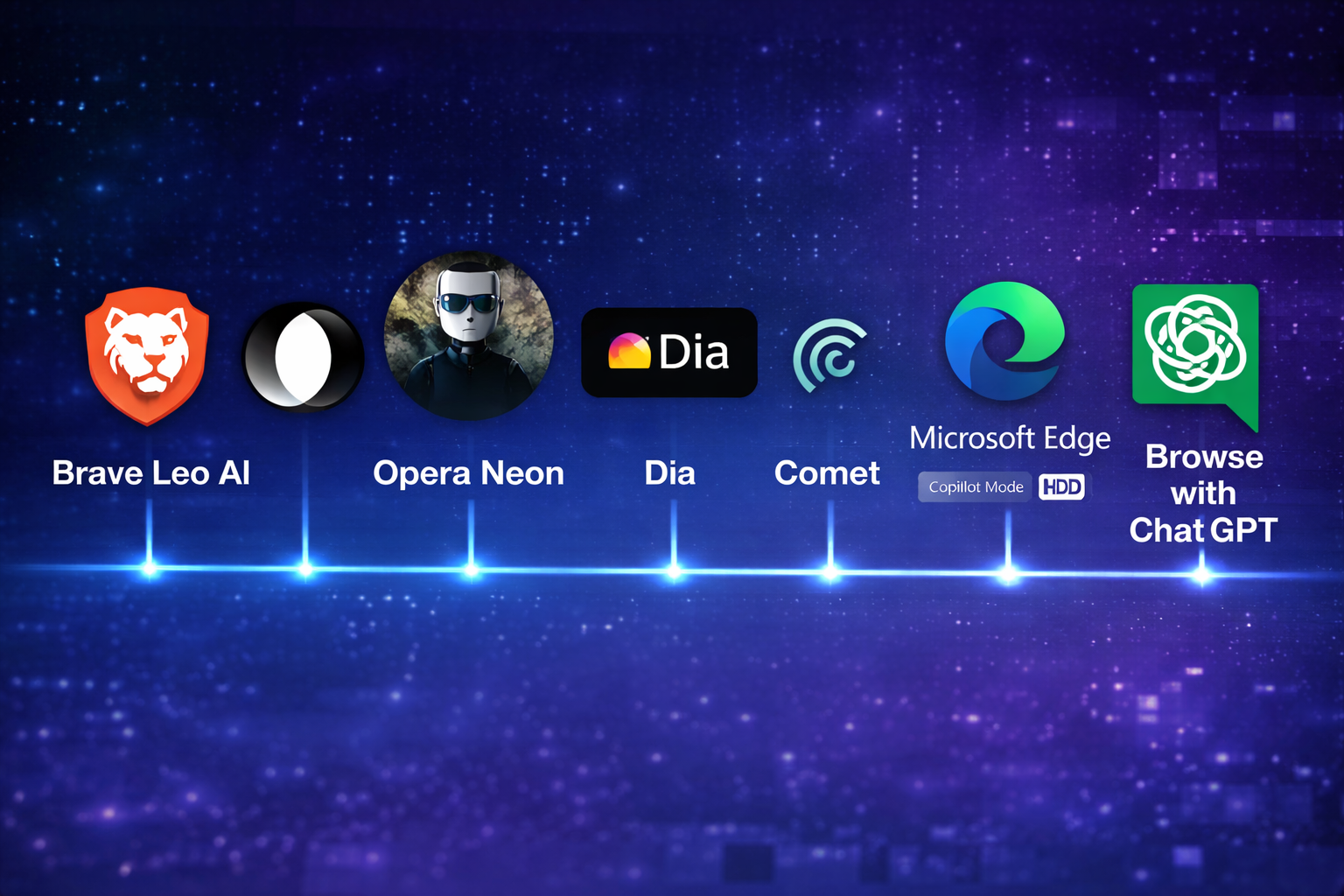
Several modern browsers already include agentic capabilities. These browsers integrate AI agents that assist users with various tasks. They demonstrate how agentic browsing is becoming a reality.
Examples include:
- Microsoft Edge with Copilot integration
- Opera Neon with AI-powered automation features
- Perplexity Comet with autonomous research capabilities
- Brave Leo with privacy-focused AI browsing
These browsers can summarize content, automate research, and perform tasks across websites. They represent the early stages of agentic browser adoption.
Agentic Browsers vs Traditional Browsers
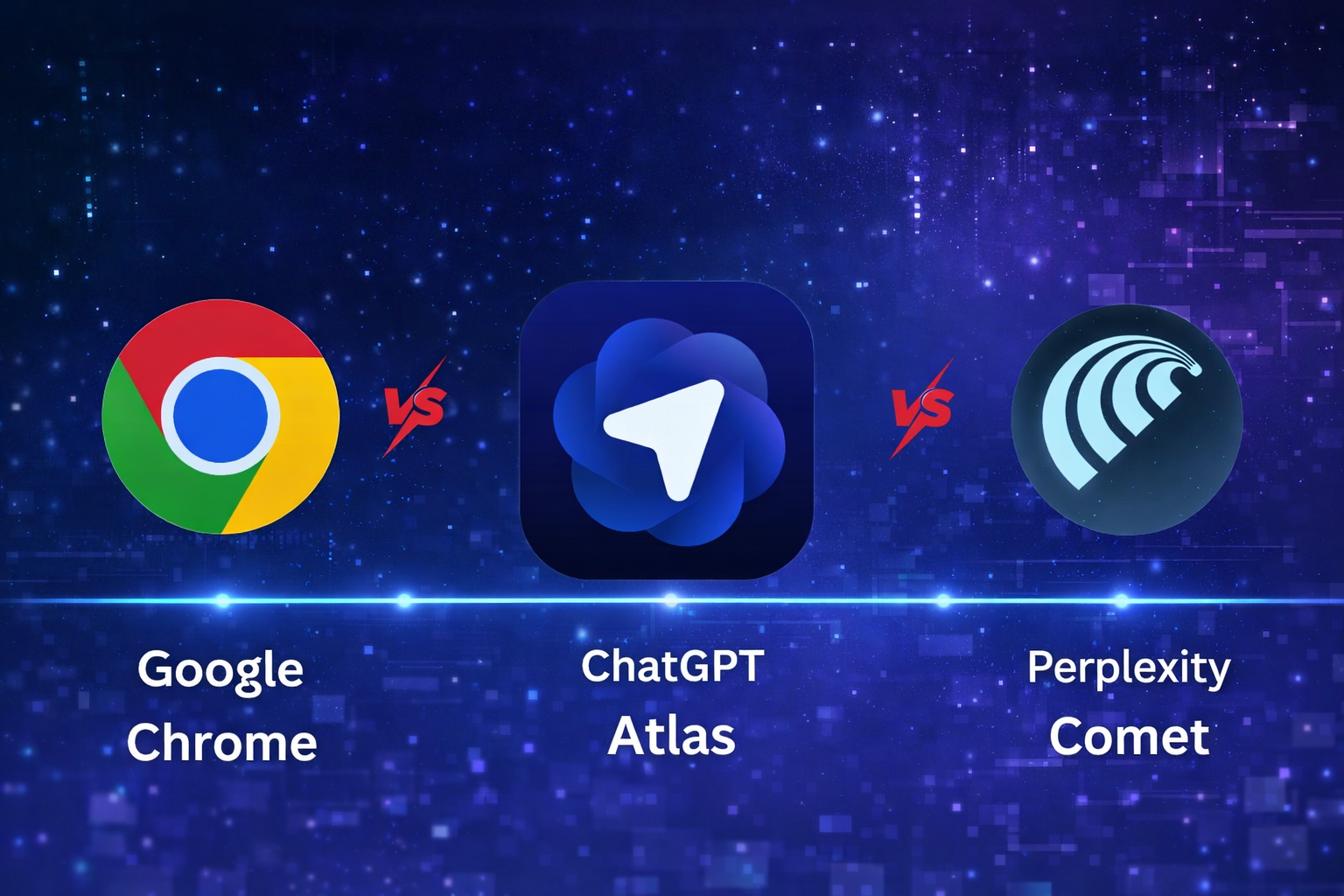
Traditional browsers are designed to display information and allow users to navigate websites manually. They depend entirely on human input for performing tasks. Users must search, click, and complete actions themselves. This process can be time-consuming and inefficient for enterprise workflows.
Agentic browsers, on the other hand, can understand instructions and perform tasks automatically. They reduce the need for manual effort and improve productivity. They also help users complete tasks faster by automating repetitive actions. This represents a significant advancement in browser technology.
Key differences include:
Traditional Browsers:
- Manual interaction required
- Passive tools
- Limited automation
- User-driven actions
Agentic Browsers:
- Autonomous task execution
- Intelligent assistance
- Workflow automation
- Agent-driven operations
This shift represents the next stage in browser evolution.
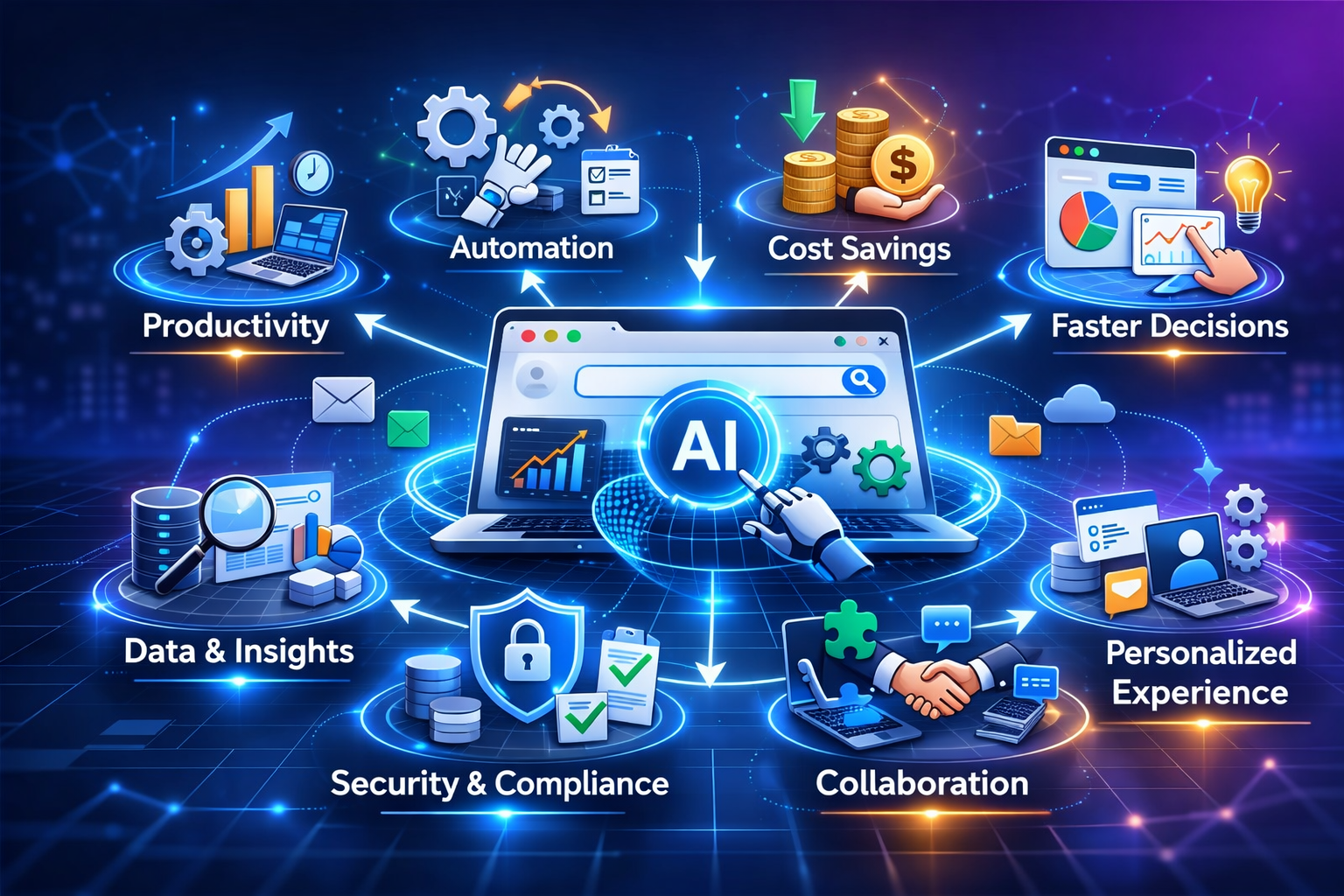
Benefits of Agentic Browsers for Enterprises
Agentic browsers provide several advantages for businesses and organizations. They help reduce manual effort and improve operational efficiency. Employees can focus on strategic work instead of repetitive tasks. This leads to better productivity and improved business outcomes.
Organizations can automate workflows and improve decision-making processes. These browsers can collect information, generate insights, and assist with operational tasks. This helps businesses operate more efficiently. It also improves overall performance.
Major benefits include:
- Increased productivity
- Faster task completion
- Reduced manual effort
- Improved operational efficiency
- Better decision support
These benefits make agentic browsers valuable for modern enterprises.+
Enterprise Use Cases of Agentic Browsers
Agentic browsers can be used across various enterprise functions. They help automate tasks and improve efficiency in multiple departments. Businesses can use them to streamline operations and reduce manual workload. This improves productivity across the organization.
They can assist in research, data collection, and workflow automation. They can also monitor systems and generate reports automatically. This helps organizations make better decisions. It also improves operational efficiency.
Common enterprise use cases include:
- Automated research and data collection
- Form filling and submission
- Workflow automation
- Monitoring and reporting
- Integration with enterprise platforms
These use cases demonstrate the practical value of agentic browsers.
How XgenPlus Supports the Future of Agentic Digital Work
As agentic browsers automate workflows, secure communication platforms become essential. These browsers interact with enterprise systems, email platforms, and business applications. This makes data security and privacy extremely important. Organizations need secure infrastructure to support autonomous systems.
XgenPlus provides a secure and enterprise-ready communication platform designed for modern digital workplaces. It ensures that enterprise communication remains protected and controlled. This makes it suitable for AI-driven and agent-assisted environments. It also helps organizations maintain data sovereignty and privacy.
XgenPlus enables secure digital workflows through:
- Secure enterprise email infrastructure
- Private and controlled communication environment
- Enterprise-grade security and encryption
- Reliable platform for AI-assisted workflows
- Support for modern digital workplaces
Platforms like XgenPlus enterprise email solution provide the secure foundation required for agentic and AI-powered enterprise environments.
The Future of Web Browsing
Web browsing is evolving from manual interaction to autonomous operation. Agentic browsers will become more intelligent and capable over time. They will help users perform tasks more efficiently. This will improve productivity and reduce manual effort.
Organizations will increasingly adopt agentic browsers to improve efficiency. These browsers will integrate with enterprise platforms and automate workflows. This will transform how businesses operate. It will also improve overall performance.
Future trends include:
- Autonomous digital workflows
- AI-assisted decision making
- Improved productivity
- Reduced operational effort
- Smarter enterprise systems
Agentic browsers will play a key role in the future of digital work.
Conclusion
Agentic browsers are redefining the future of web browsing by introducing intelligence and automation. They transform browsers from passive tools into active digital assistants. This improves productivity and reduces manual effort. It also enables smarter and more efficient workflows.
Enterprises adopting agentic browsers will gain significant advantages. They will be able to automate processes and improve operational efficiency. Secure communication platforms like XgenPlus will support these AI-driven environments. This will ensure security, privacy, and reliability.
The future of web browsing is intelligent, autonomous, and enterprise-ready. Agentic browsers will become an essential component of modern digital infrastructure.