
Agentic Browsers: Redefining the Future of Web Browsing
February 16, 2026
Secure Email vs Regular Email: What Businesses Need to Know
March 2, 2026
How AI Helps Prevent Email Phishing Attacks
February 23, 2026
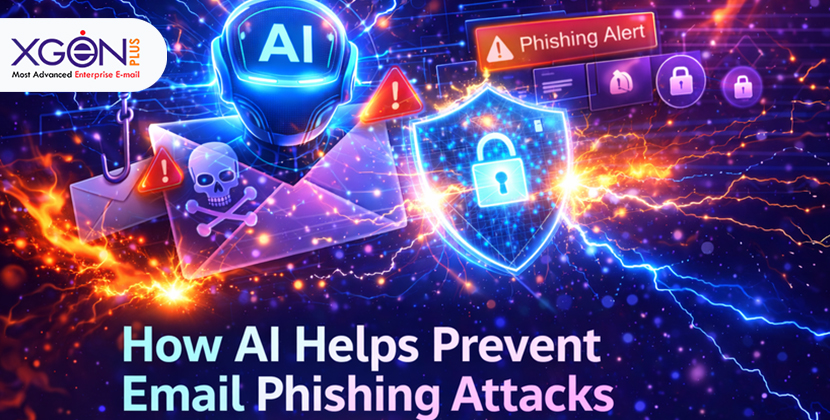
Email phishing remains one of the most serious cybersecurity threats affecting individuals and organizations worldwide. Attackers use deceptive emails to trick users into sharing sensitive information such as login credentials, financial data, or confidential business details. These emails often appear legitimate, making it difficult for users to identify malicious intent. As businesses increasingly rely on digital communication, phishing attacks continue to grow in frequency and sophistication.
Artificial intelligence (AI) has emerged as a powerful solution to address this challenge. AI enhances threat detection by analyzing patterns, behavior, and anomalies that traditional systems cannot easily identify. Modern Enterprise Email Security systems now use AI to detect threats faster and more accurately. By integrating AI into an enterprise email solution, organizations can significantly reduce phishing risks and improve overall communication security.
Understanding Email Phishing Attacks
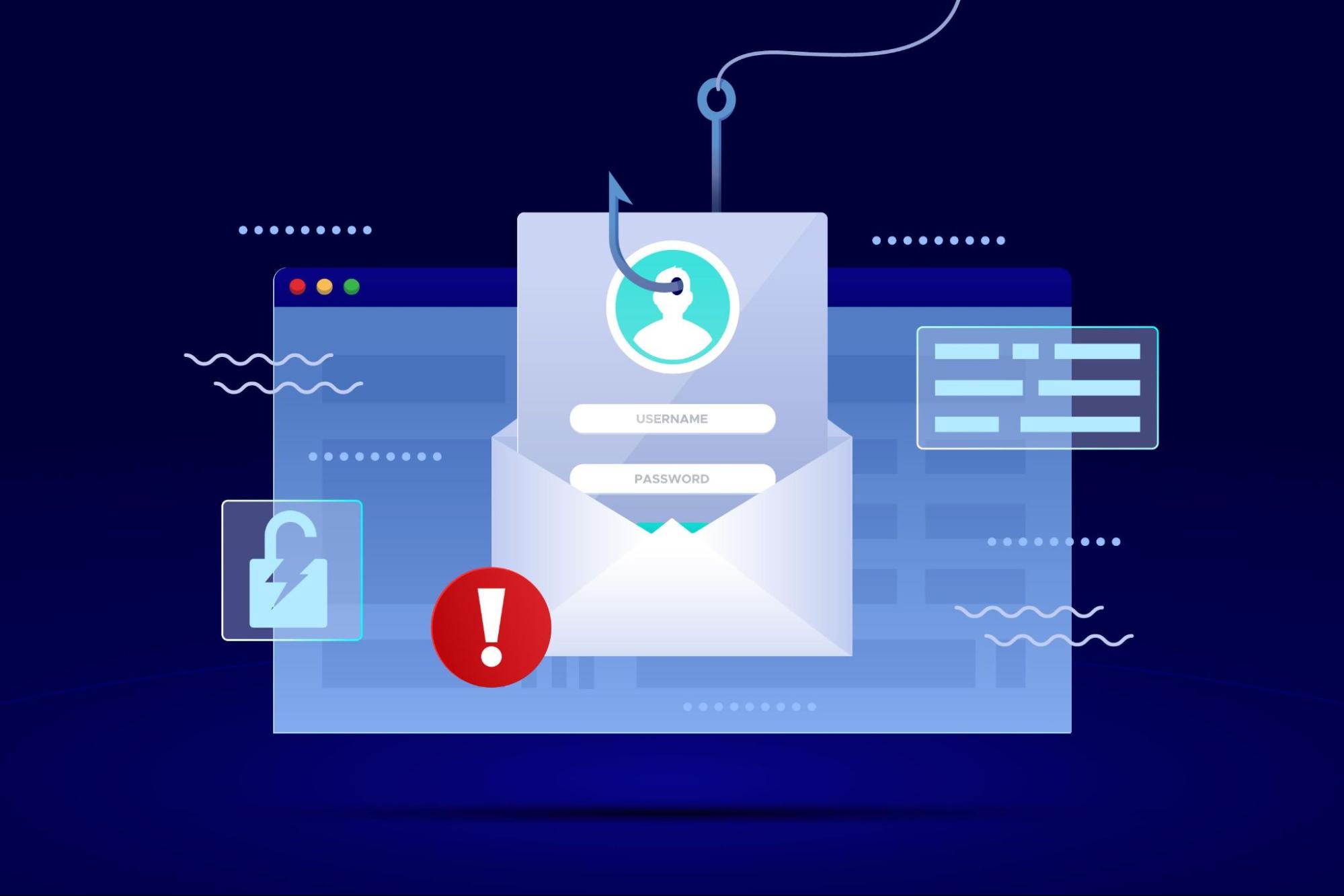
Email phishing is a cyberattack technique where attackers impersonate trusted individuals or organizations to deceive recipients. The primary goal is to manipulate users into clicking malicious links, downloading harmful attachments, or sharing sensitive information. These attacks often exploit human psychology by creating urgency, fear, or curiosity. As phishing methods evolve, they become harder to detect using traditional filters.
Common characteristics of phishing emails include:
- Fake sender addresses that look legitimate
- Urgent or threatening language
- Suspicious links or attachments
- Requests for sensitive information
- Messages designed to create panic or urgency
Understanding these characteristics is essential because it helps explain why phishing attacks are effective and why advanced detection technologies like AI are necessary.
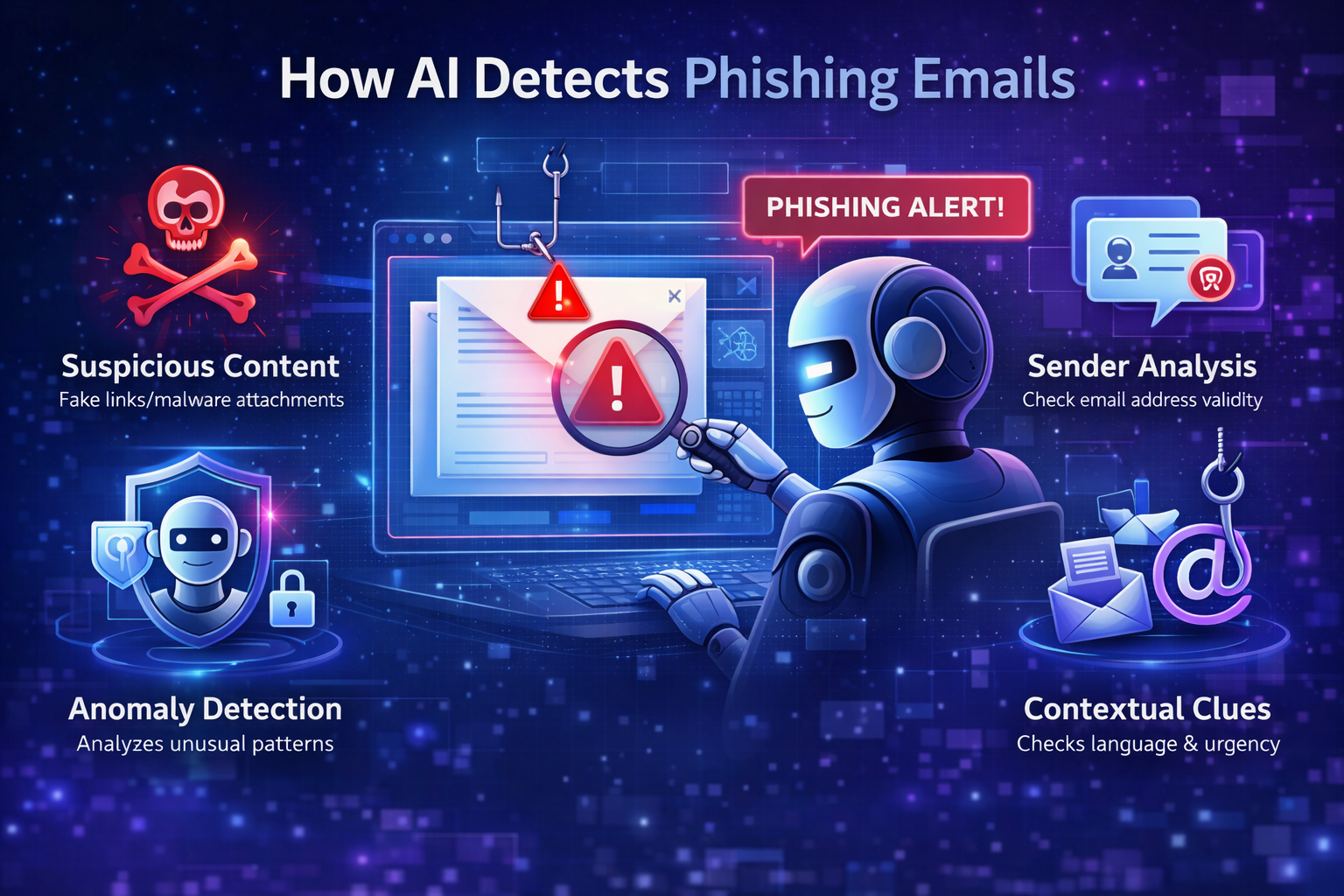
How AI Detects Phishing Emails
AI detects phishing emails by analyzing vast amounts of email data and identifying patterns that indicate suspicious activity. Unlike traditional systems that rely on fixed rules, AI continuously learns from new threats and improves detection accuracy. It examines email structure, sender behavior, and communication patterns to identify anomalies. This intelligent approach allows AI to detect phishing attempts that would otherwise go unnoticed.
1. Analyzing Email Content
AI analyzes the content of emails to identify suspicious messaging patterns and deceptive intent. It evaluates language tone, sentence structure, and context to determine whether an email is potentially malicious. Unlike traditional filters, AI understands the meaning behind the words rather than simply matching keywords. This enables more accurate detection of phishing emails, even when attackers use sophisticated language.
AI can detect:
- Urgent requests for action
- Requests for sensitive information
- Suspicious keywords commonly used in phishing
This content analysis helps prevent phishing emails from reaching users and reduces the chances of successful attacks.
2. Detecting Suspicious Sender Behavior
AI evaluates sender behavior to determine whether an email originates from a trusted source. It compares sender information with historical communication patterns and identifies inconsistencies. If an email comes from an unfamiliar domain or shows unusual behavior, AI flags it as suspicious. This analysis helps prevent spoofing attacks where attackers impersonate trusted individuals.
AI checks for:
- Unusual sender domains
- Spoofed email addresses
- First-time or unknown senders
- Abnormal sending frequency
By monitoring sender behavior, AI adds an important layer of protection against phishing threats.
3. Identifying Malicious Links
Malicious links are one of the most common tools used in phishing attacks. AI analyzes these links to determine whether they lead to harmful or fraudulent websites. It evaluates domain reputation, link structure, and hidden redirections to identify risks. This proactive analysis helps prevent users from accessing unsafe websites.
AI analyzes links by:
- Checking domain reputation
- Comparing URLs with known phishing databases
- Detecting hidden or disguised links
- Identifying suspicious redirections
This capability ensures safer email communication and protects users from credential theft.
4. Behavioral Analysis and Pattern Recognition
Behavioral analysis is one of the most advanced features of AI in email security. AI learns how users normally communicate and identifies unusual patterns that may indicate phishing attempts. It continuously monitors communication behavior and detects anomalies in real time. This helps identify threats that do not match known phishing signatures.
AI can detect:
- Emails sent at unusual times
- Messages requesting unusual actions
- Communication that differs from normal behavior
Organizations using an enterprise email solution with AI-driven behavioral analysis gain stronger protection against advanced phishing threats.
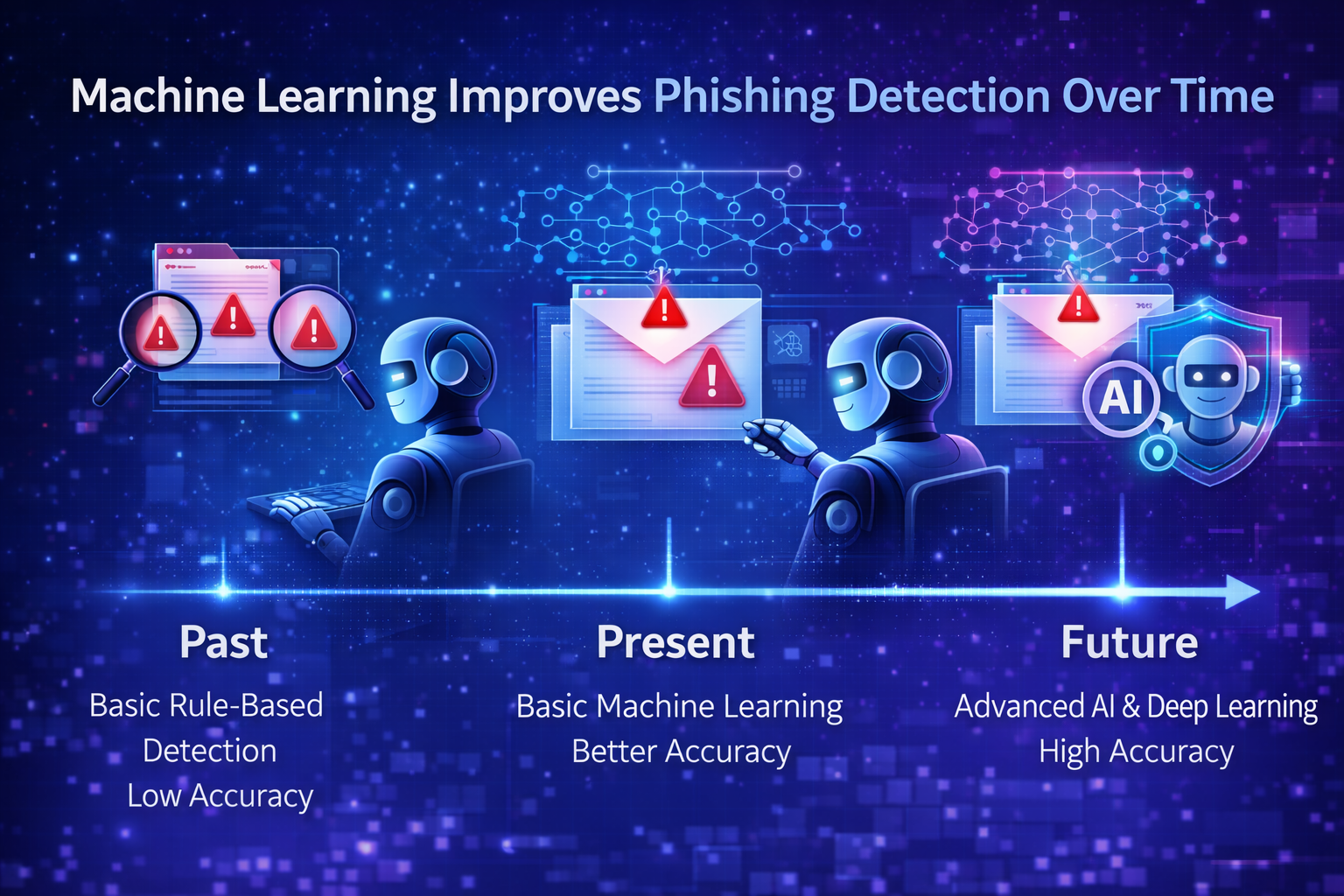
Machine Learning Improves Phishing Detection Over Time
Machine learning enables AI systems to learn from past phishing attacks and improve detection accuracy. It continuously updates its models based on new threat data, allowing it to recognize emerging attack techniques. This adaptive learning process ensures long-term effectiveness against evolving threats. As AI processes more data, its ability to detect phishing improves significantly.
Machine learning helps by:
- Continuously analyzing new threats
- Updating detection models automatically
- Reducing false positives
- Improving detection accuracy
This continuous improvement makes AI an essential component of modern email security.
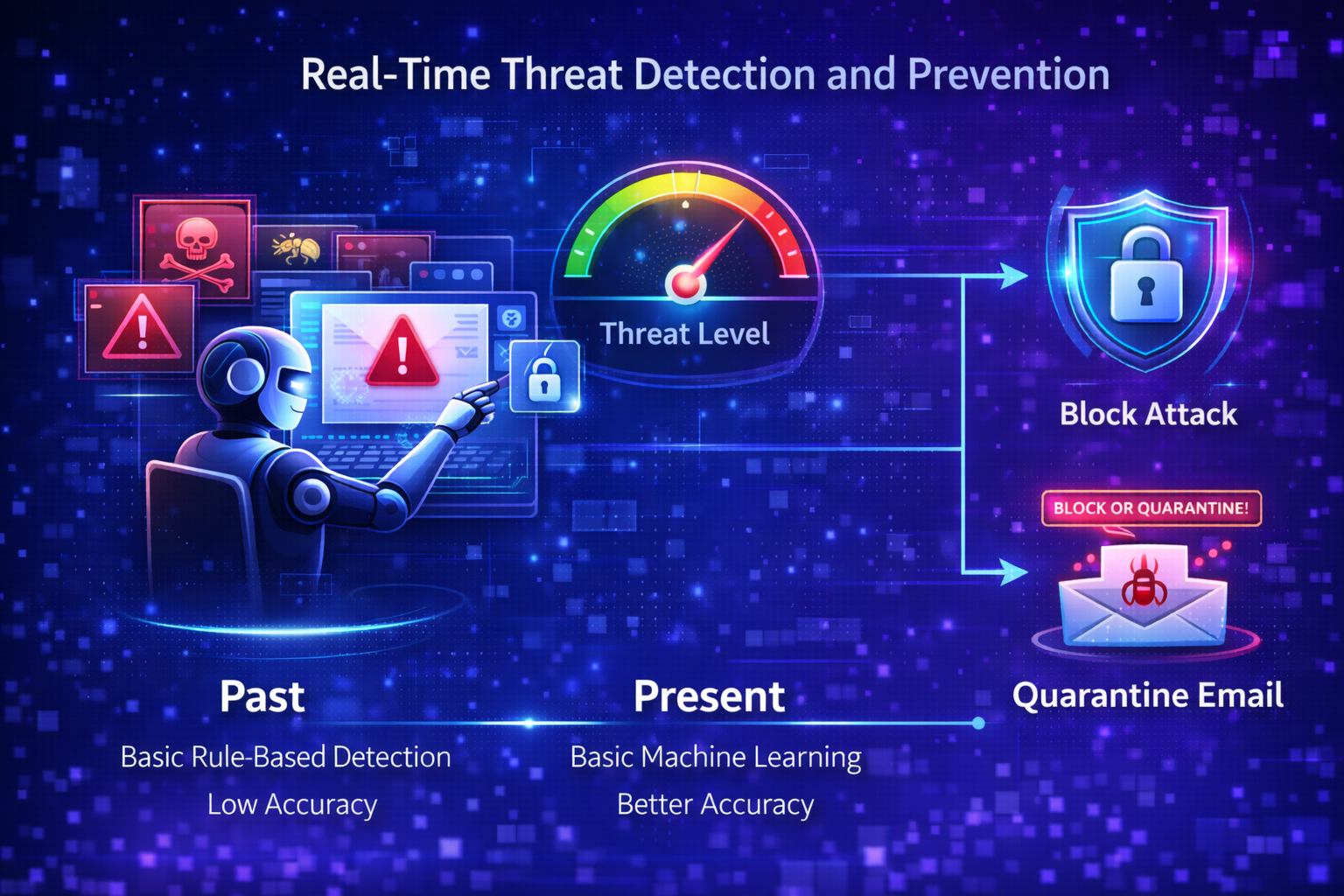
Real-Time Threat Detection and Prevention
AI provides real-time protection by scanning emails immediately upon arrival. This allows threats to be detected and blocked before they reach users’ inboxes. Real-time detection reduces the risk of human interaction with malicious emails. It also helps organizations respond faster to potential threats.
AI can:
- Scan emails instantly upon arrival
- Block phishing emails before reaching inboxes
- Alert users about suspicious messages
- Prevent malicious links from opening
Advanced systems also include intelligent features like AI Compose , which helps users draft accurate emails and avoid communication patterns that attackers may exploit.
Reducing Human Error in Email Communication
Human error is one of the leading causes of successful phishing attacks. Users may accidentally click malicious links or trust fraudulent emails. AI helps reduce this risk by providing warnings and blocking suspicious emails. It acts as a safety layer that protects users from making costly mistakes.
AI helps reduce human error by:
- Warning users about suspicious emails
- Highlighting potentially dangerous links
- Blocking unsafe attachments
- Providing security alerts and recommendations
This support improves user awareness and strengthens overall email safety.
Detecting Zero-Day and Advanced Phishing Attacks
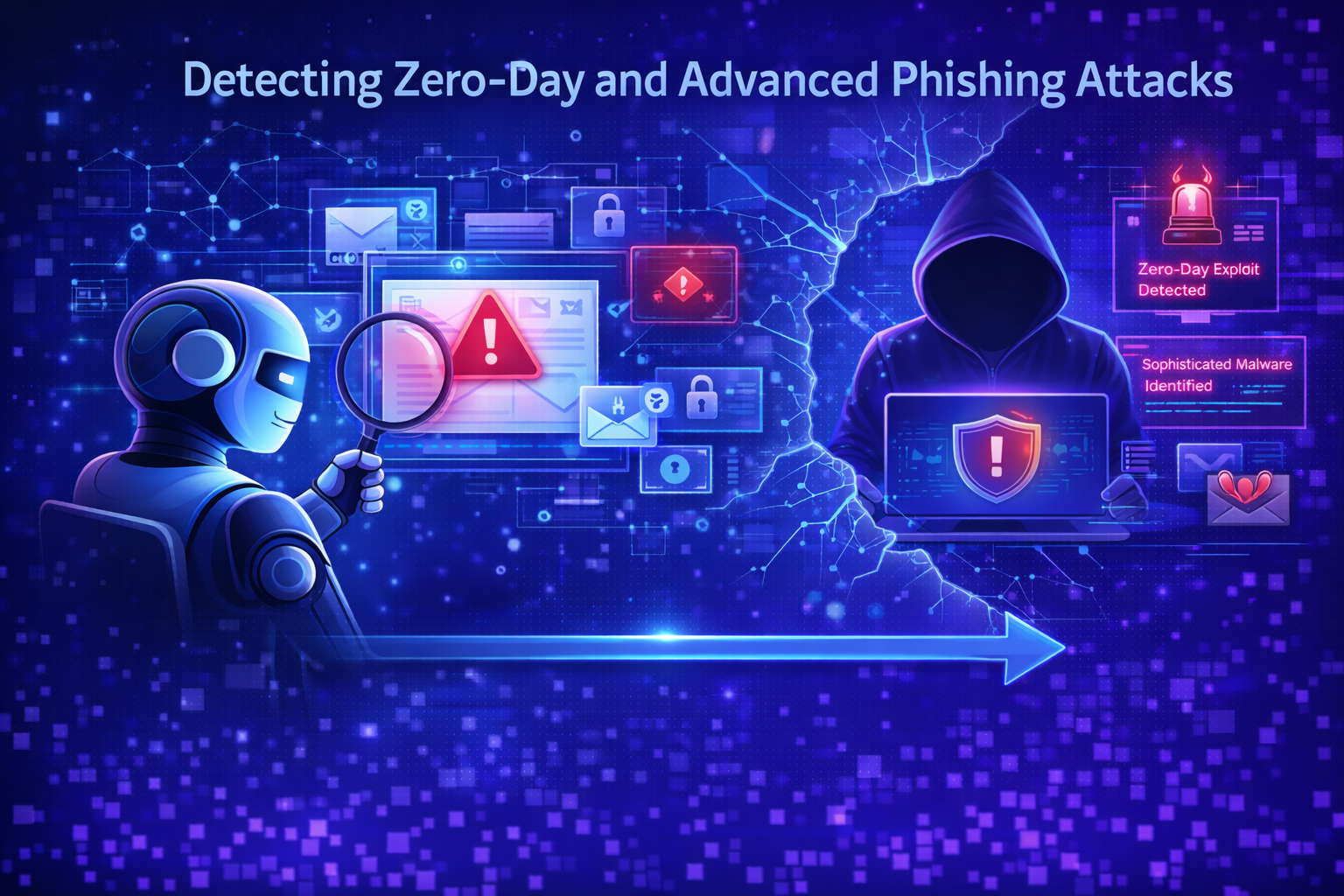
Zero-day phishing attacks use new techniques that traditional systems cannot immediately recognize. AI detects these threats by analyzing patterns and identifying anomalies rather than relying only on known threat signatures. This proactive approach allows AI to detect new threats faster. It ensures continuous protection even against unknown attack methods.
AI can:
- Identify unusual email structures
- Detect new phishing techniques
- Analyze unknown threats
- Respond quickly to emerging risks
Maintaining strong Email Security & Compliance practices helps ensure protection against evolving cyber threats.
Improving Organizational Cybersecurity
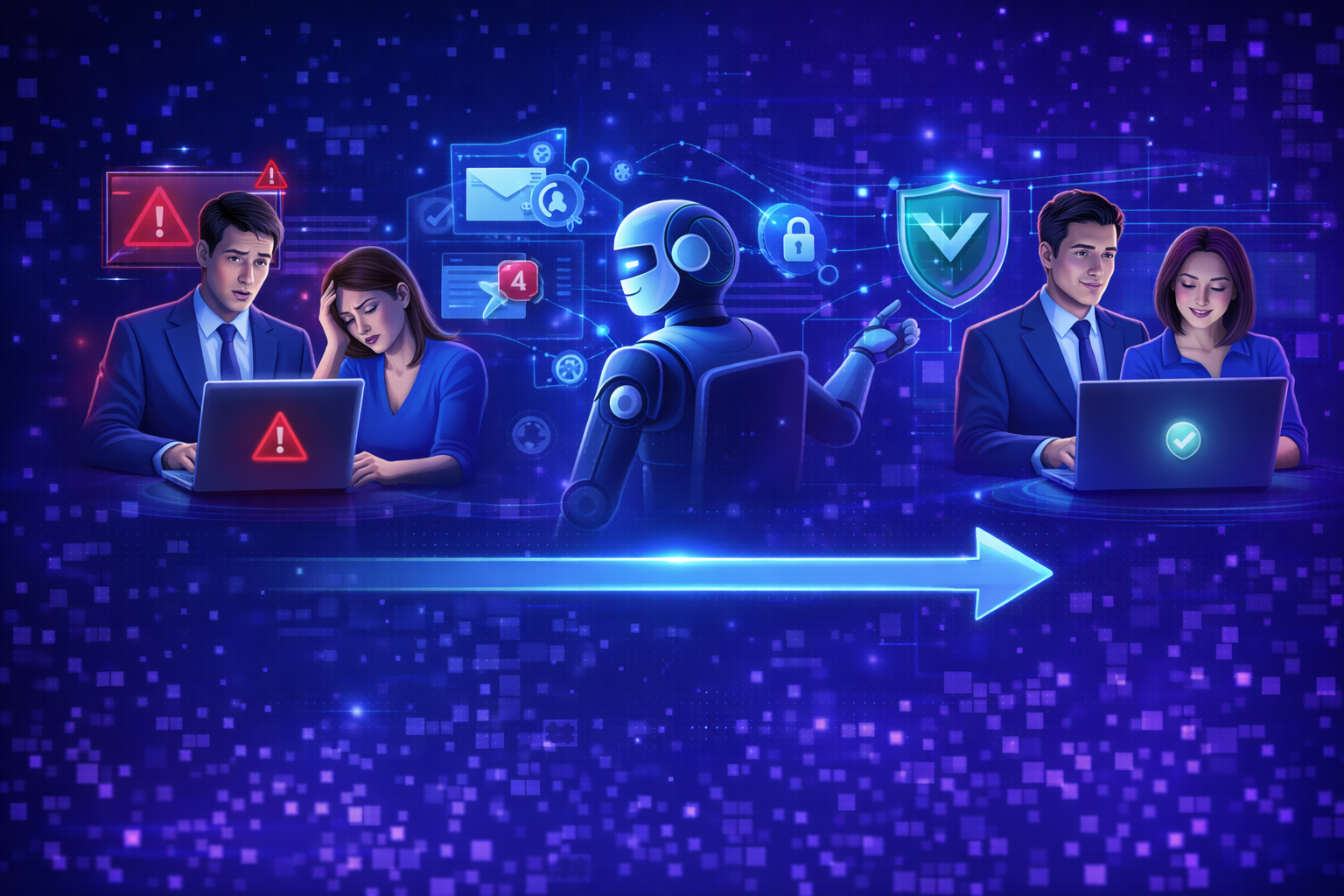
AI enhances overall cybersecurity by automating threat detection and reducing manual effort. It enables security teams to identify and respond to threats more efficiently. This improves organizational security posture and reduces vulnerability to phishing attacks. AI also helps organizations maintain safer communication environments.
Key benefits include:
- Automated threat detection
- Reduced manual monitoring
- Faster response times
- Improved overall security posture
AI-driven Enterprise Email Security systems play a critical role in strengthening organizational protection.
The Future of AI in Email Security
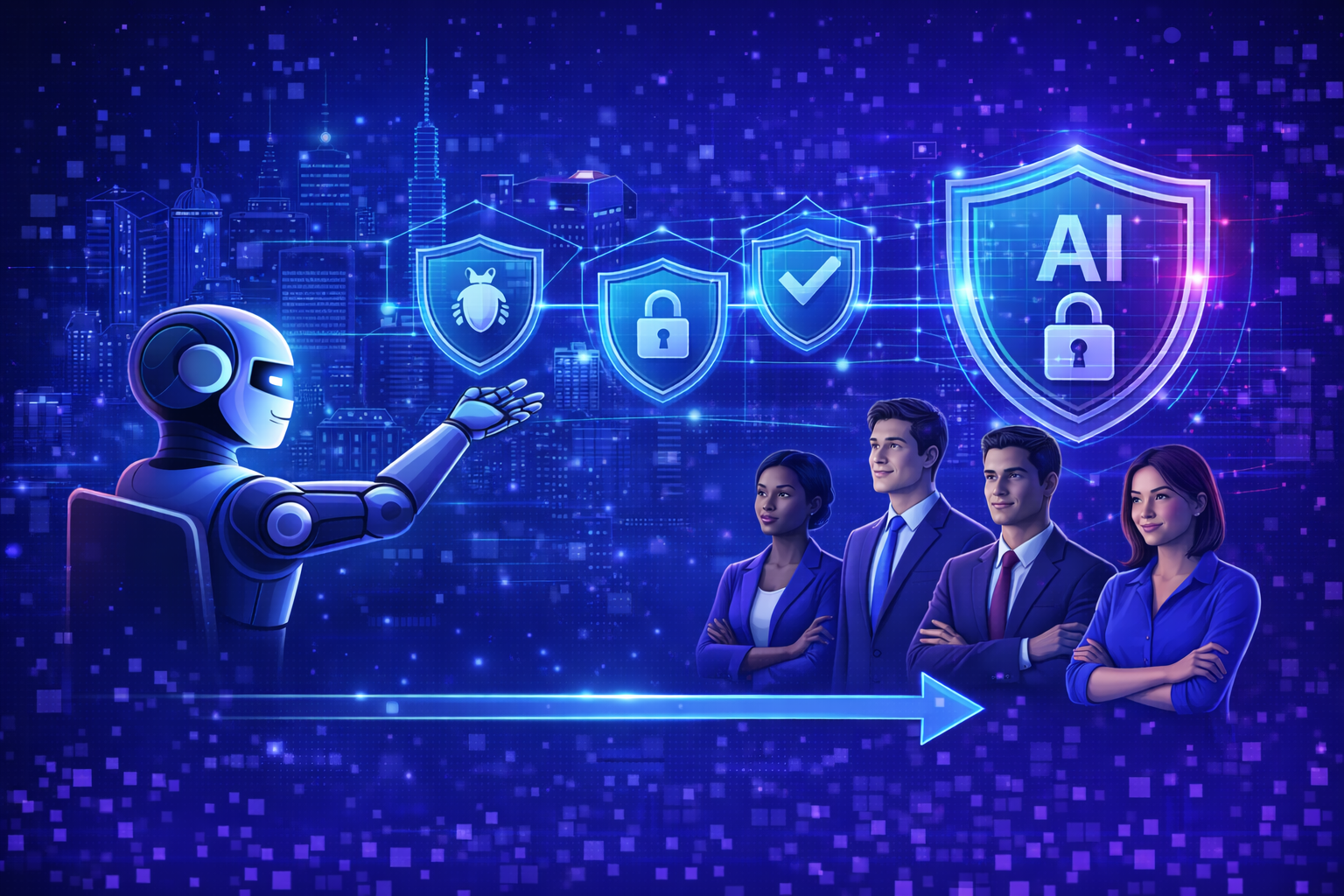
AI will continue to evolve and improve email security capabilities. Future systems will be more accurate, faster, and better at detecting sophisticated threats. AI will also integrate with other cybersecurity technologies to provide comprehensive protection. This advancement will help ensure safer digital communication.
Future improvements include:
- More accurate threat detection
- Faster response times
- Improved behavioral analysis
- Better protection against advanced attacks
AI will remain essential for maintaining secure and reliable email communication.
Conclusion
AI has transformed the way phishing attacks are detected and prevented. By analyzing email content, monitoring sender behavior, detecting malicious links, and providing real-time protection, AI significantly improves email security. Machine learning allows AI to continuously adapt and stay effective against new threats.
As cyberattacks become more sophisticated, adopting advanced technologies and secure communication systems becomes essential. Implementing strong security practices and reliable email protection ensures safer digital communication and reduces the risk of phishing attacks.