
What Is Email Etiquette? 10 Workplace Best Practices
December 5, 2025Axecasino Canada bonuses payments games today
December 24, 2025
What Is PGP? And Why Does It Matter for Email Security?
December 16, 2025
Introduction
Email remains the backbone of business communication — but it’s also one of the easiest ways for cybercriminals to access sensitive information. From financial records to confidential strategies, everything passes through your inbox. That’s why organizations are shifting toward stronger security methods like PGP (Pretty Good Privacy) .
PGP offers one of the most reliable ways to protect emails from interception, manipulation, and unauthorized access. In this blog, we break down what PGP is, how it works, and why it plays such a crucial role in modern email security.
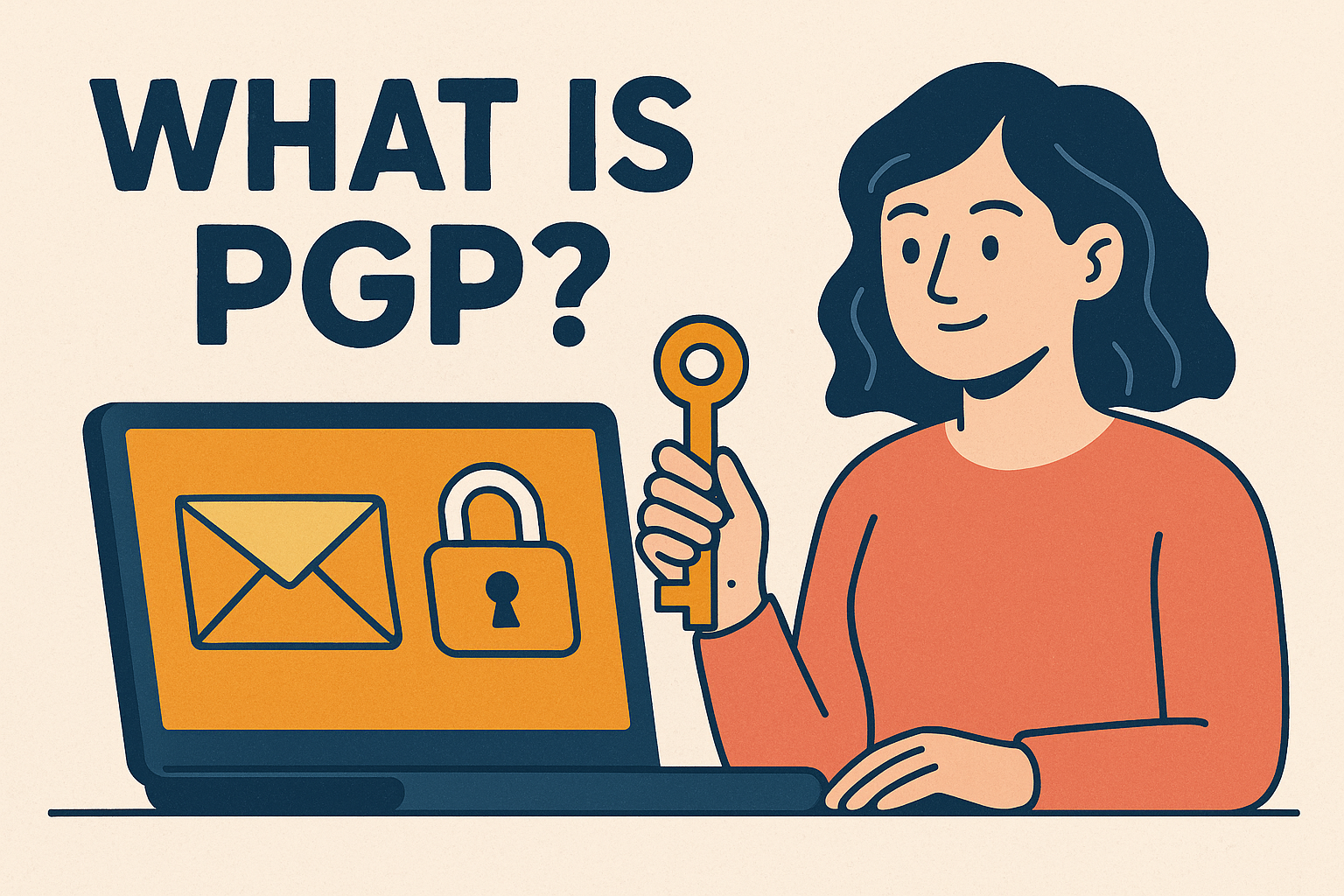
What Is PGP?
PGP (Pretty Good Privacy) is a powerful encryption method designed to secure emails and files. It ensures that your message stays private and readable only by the intended recipient. Even if someone intercepts the message, they can't decode it without the right key.Over the years, PGP has become the gold standard for protecting sensitive communication across industries. From government departments to enterprise organizations, many rely on PGP to keep their digital conversations safe and confidential.
PGP is widely used across:
- Government agencies
- Enterprises
- Legal and financial teams
- Healthcare organizations
- Anyone handling sensitive data
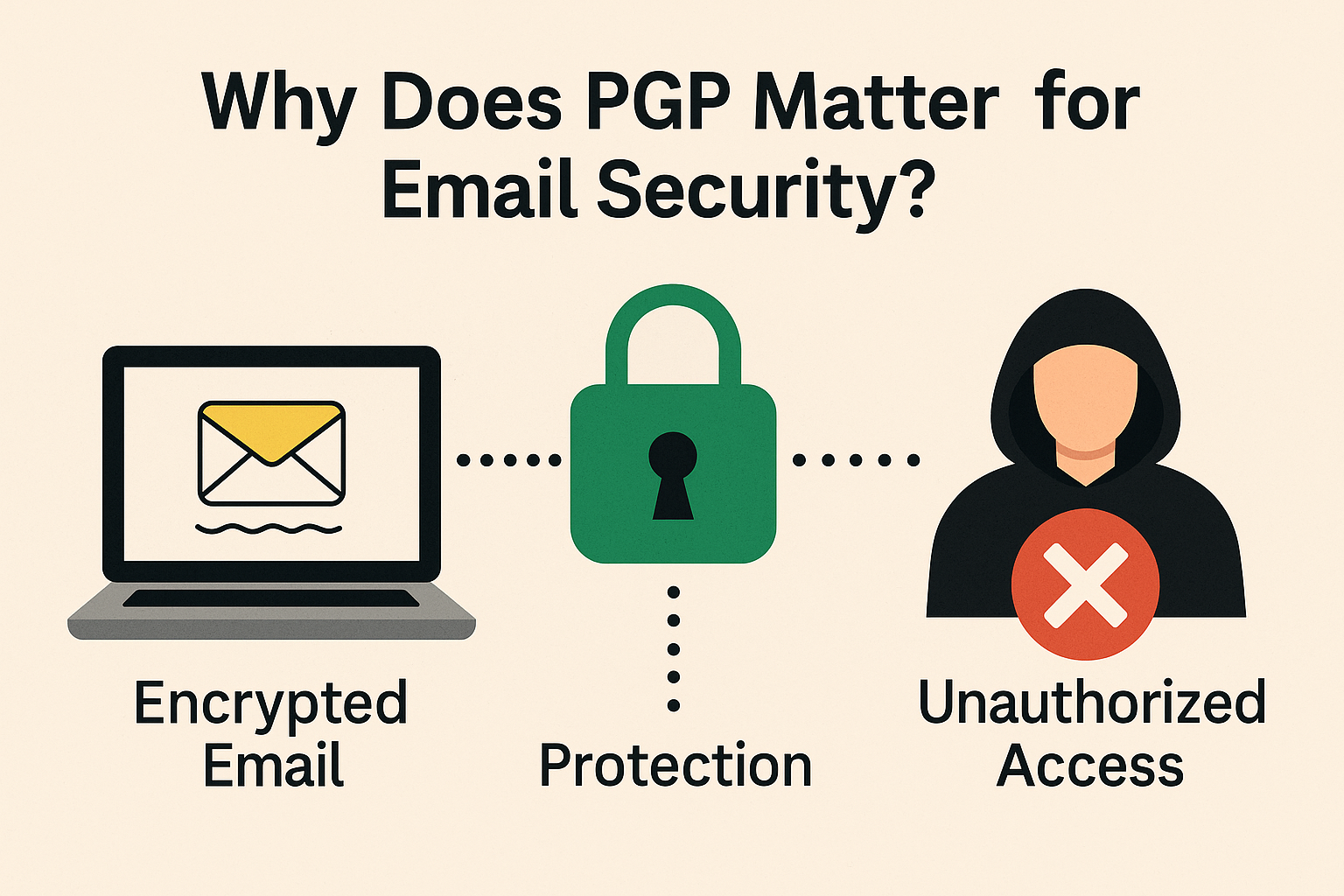
Why Does PGP Matter for Email Security?
PGP matters because traditional email systems weren’t designed with security in mind. Emails can be intercepted, altered, or impersonated without strong encryption. PGP fills this gap by offering privacy, integrity, and authentication.It ensures that only approved recipients can read your emails and that no one tampers with the message during transit. In a world filled with phishing attacks and data breaches, PGP gives organizations a safe foundation for communication.
Here’s what PGP helps you achieve:
1. Privacy — Only the recipient can read the email
PGP uses strong public key encryption to scramble your message before sending it. Even if intercepted, the information remains unreadable without the matching private key.
2. Integrity — No one can modify the email content
If any part of the email is altered during delivery, the recipient gets an alert. This prevents tampering and ensures you’re always reading the original message.
3. Authenticity — You can verify the sender
Digital signatures built into PGP help verify the identity of the sender. This makes it harder for attackers to impersonate trusted contacts.
4. Protection against phishing
By verifying identity and message integrity, PGP significantly reduces the chances of falling victim to sophisticated phishing attacks.
How PGP Works (Explained in Simple Terms)
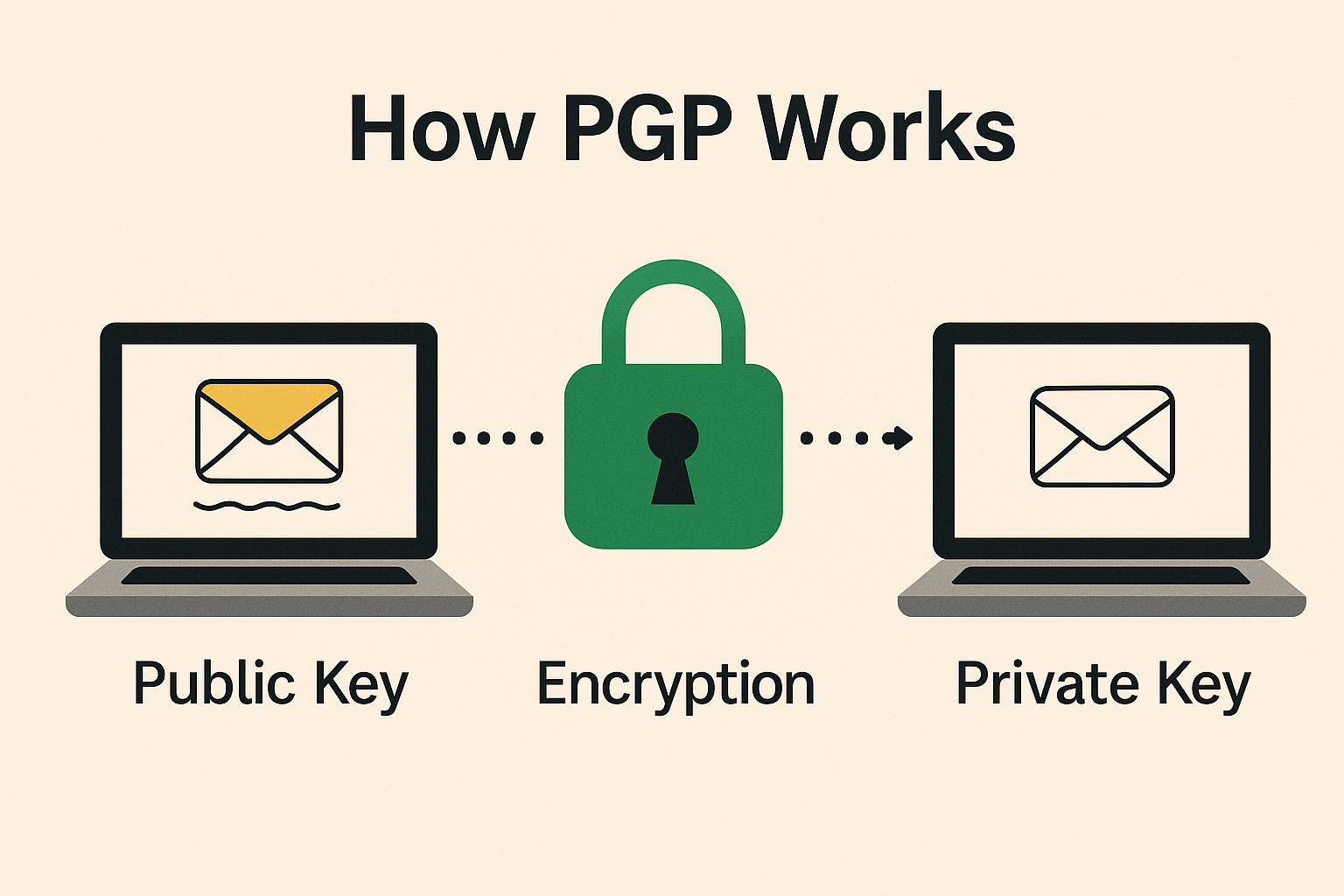
PGP might sound technical, but its logic is simple and effective. It works using two keys — a public key for encrypting messages and a private key for decrypting them. This method is called asymmetric encryption , and it’s widely considered one of the safest encryption techniques. When you send an email, PGP locks it with the recipient’s public key, and only their private key can unlock it. This ensures that even if hackers intercept your messages, they can't read them.
Here’s how an encrypted email journey looks:
Step 1: You write an email
PGP takes your message and encrypts it using the recipient’s public key, transforming it into unreadable characters.
Step 2: The encrypted email travels through the internet
Even if someone intercepts the email during transmission, they cannot understand the content.
Step 3: The recipient uses their private key to decrypt it
The message becomes readable again only when the proper private key is used to unlock it.
PGP also attaches digital signatures, allowing the recipient to verify:
- Who sent the email
- Whether the content was altered
- Whether the sender is authentic
Why Businesses Still Choose PGP in 2025
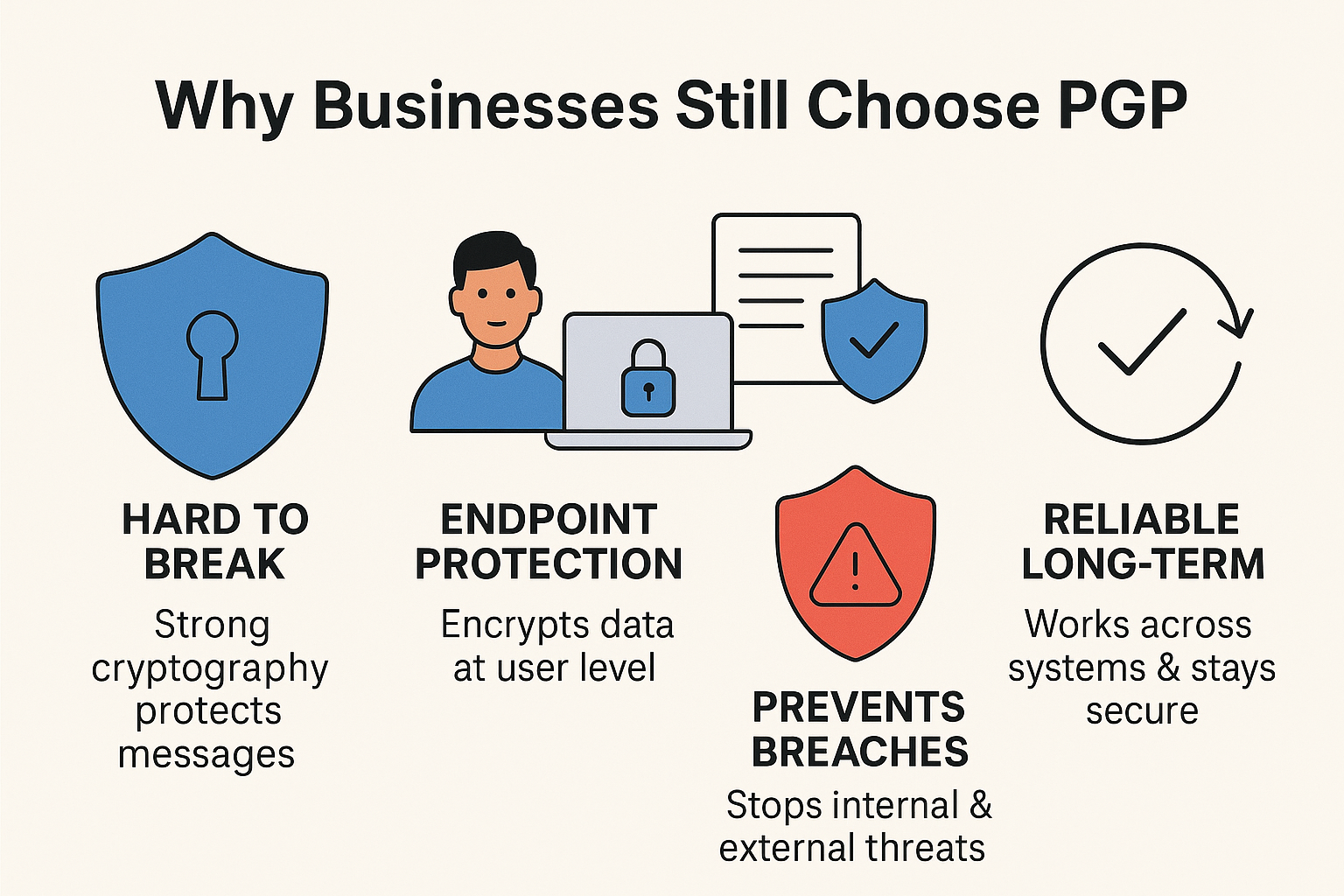
Despite newer technologies emerging, PGP continues to dominate the cybersecurity space because of its reliability. It’s extremely hard to crack, works across different systems, and empowers organizations to control their communication security.With cyber threats evolving every day, businesses need encryption methods that stay ahead of attackers — and PGP provides just that. It protects both endpoints and data in transit, making it a smart choice for enterprises.
Here’s why enterprises continue to rely on PGP:
1. It’s extremely difficult to break
PGP uses advanced cryptography that keeps attackers from deciphering messages, even with powerful tools.
2. It protects endpoints, not just servers
Encryption happens at the user level, ensuring that the message stays protected throughout its journey.
3. It supports compliance requirements
Industries under strict regulations trust PGP because it aligns with GDPR, HIPAA, RBI guidelines, and more.
4. It prevents internal and external breaches
Whether the threat comes from outside or inside the organization, PGP ensures communication remains secure.
Real-World Example: How PGP Protects a Business
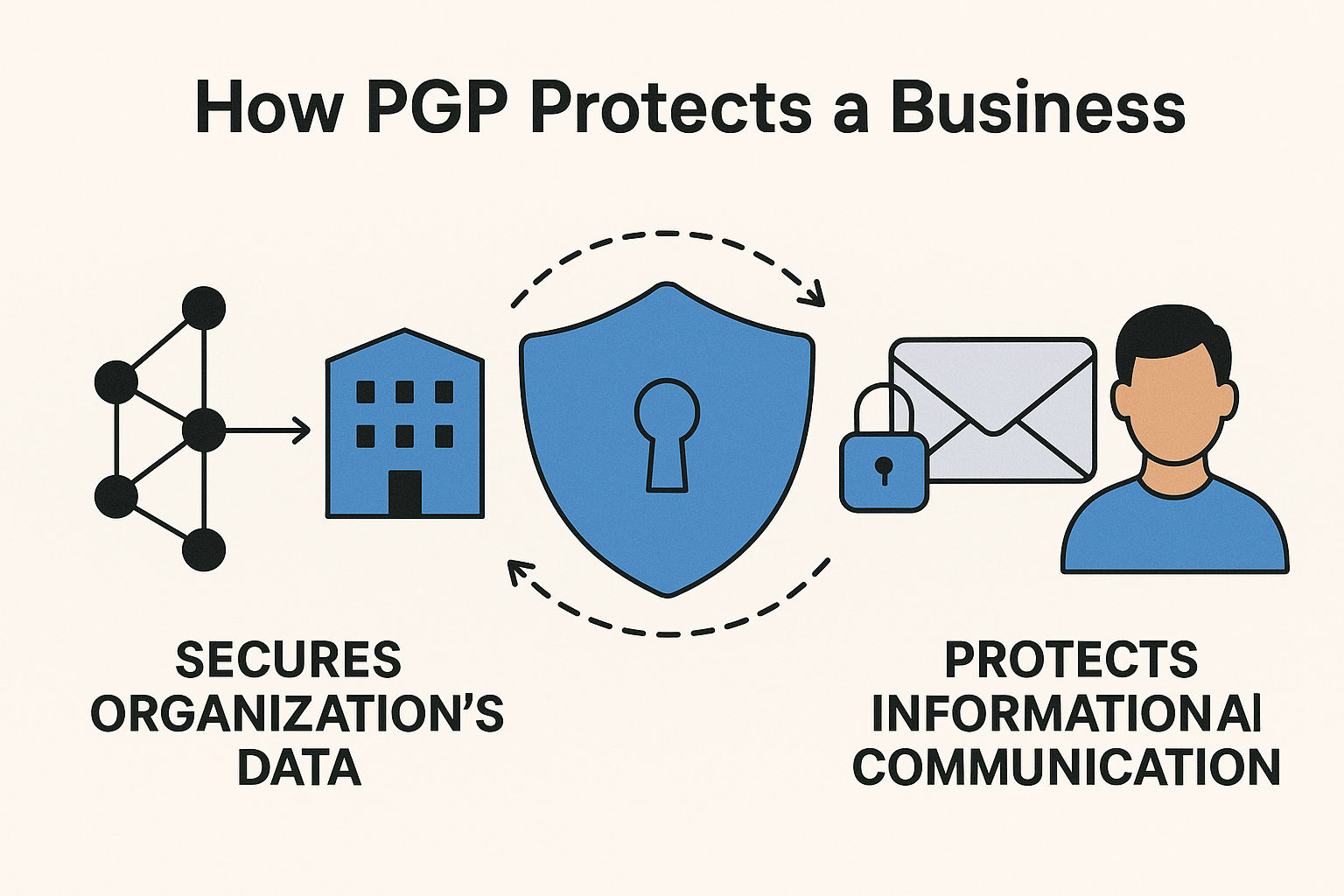
Consider a finance team exchanging quarterly revenue reports. Without PGP, these emails could be intercepted, altered, or even leaked. Attackers could easily misuse sensitive financial data.With PGP, the same emails become unreadable to unauthorized individuals. Only approved team members with the private key can see the message. This helps avoid financial fraud, data loss, and breaches — all common risks in digital communication today.
Industries using PGP include:
- BFSI
- IT services
- Government departments
- Large enterprises
- Startups protecting intellectual property
PGP vs Standard Email Security
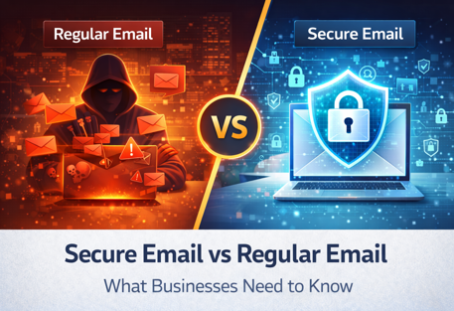
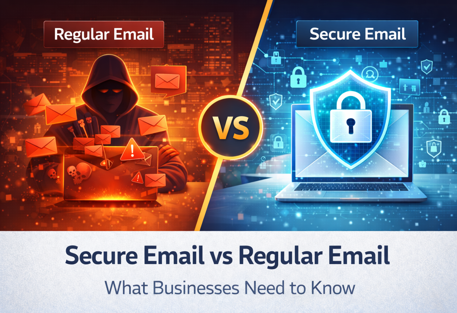
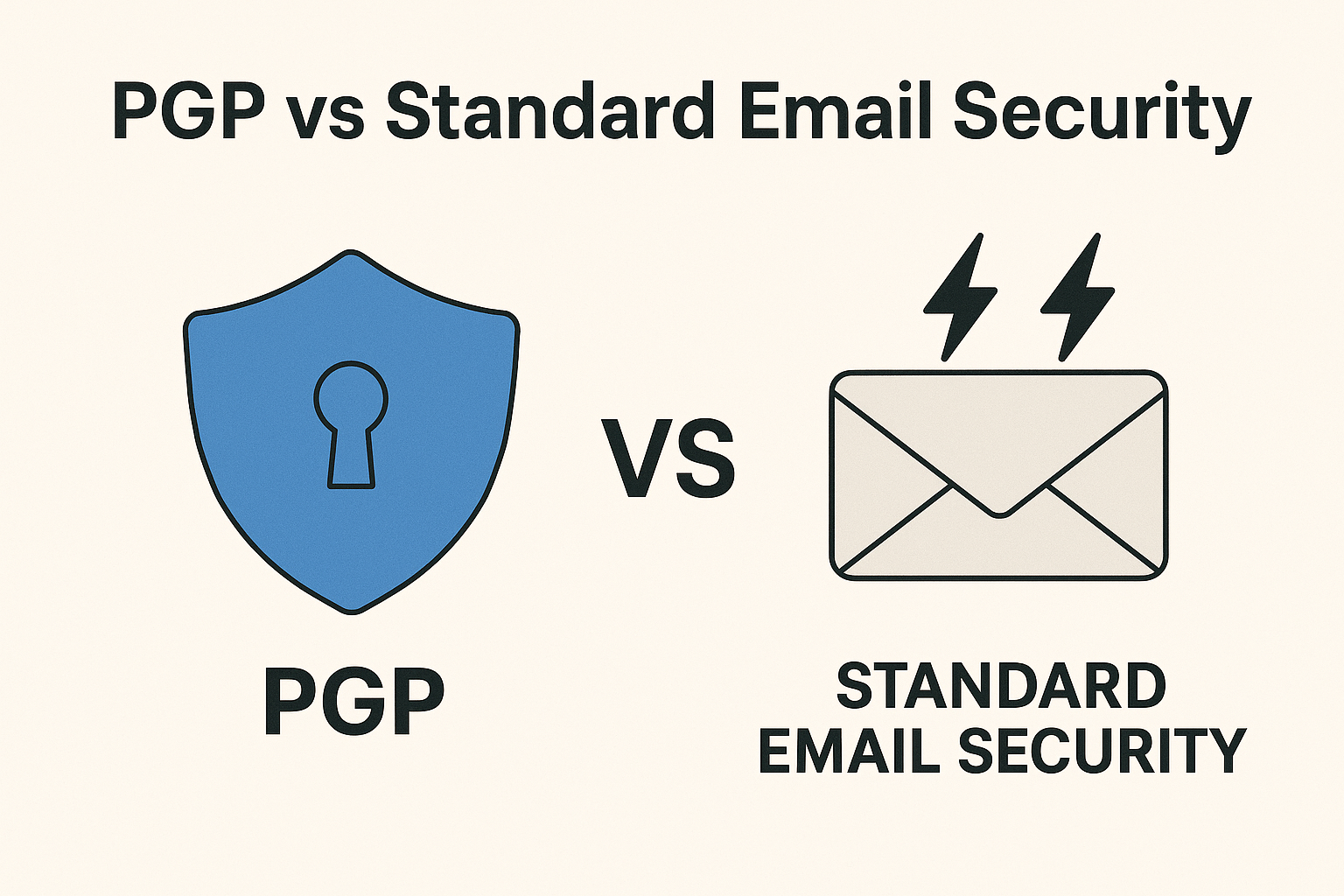
Most email servers use TLS, which protects messages only during transmission. But once the email reaches the server, it becomes vulnerable again. PGP solves this by encrypting the message itself, not just the connection.This means your data stays protected at all stages — when sent, received, and stored. For organizations handling sensitive data, this difference is crucial.
Comparison Snapshot:
Feature |
Standard Email Encryption |
PGP Encryption |
Protects emails during transit |
✔️ |
✔️ |
Protects email stored on server |
❌ |
✔️ |
Ensures only the recipient can read it |
❌ |
✔️ |
Prevents message tampering |
Limited |
✔️ |
Confirms sender identity |
❌ |
✔️ |
Ideal for enterprise email |
❌ |
✔️ |
Should Your Organization Use PGP?
If your business deals with confidential communication, legal documents, financial transactions, or internal strategies, then PGP is not just useful — it’s necessary.Modern threats require modern solutions, and PGP ensures that your emails remain safe no matter who tries to intercept them. It also integrates seamlessly with leading enterprise email solution platforms like XgenPlus.
Conclusion
PGP continues to be one of the most powerful and trusted ways to secure email communication. It protects your data, verifies identities, and helps maintain message integrity — all essential for today’s digital workplace.As cyber threats get smarter, businesses must rely on proven tools that provide reliable protection. PGP delivers exactly that, making it a must-have for organizations that value privacy and professionalism.