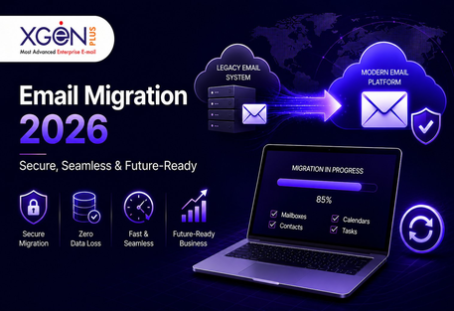

Email Migration in 2026: A Complete Email Migration Guide for Businesses
June 15, 2026
One Simple Security Habit That Can Protect Your Business Email
June 29, 2026
Company & AI Data Security: What Every Business Needs to Know
June 22, 2026
Introduction
Artificial Intelligence (AI) is transforming the way businesses operate. From drafting emails and generating reports to analyzing customer data and automating workflows, AI tools are helping organizations improve productivity and save time. Businesses of all sizes are adopting AI to streamline operations and make better decisions.
However, as AI becomes part of everyday business activities, it also introduces new security challenges. Employees often share information with AI tools without realizing the potential risks. Sensitive customer data, financial records, contracts, and internal communications can become exposed if proper safeguards are not in place.
This is why company data security has become a major concern in the AI era. Businesses must understand how AI impacts data protection and what steps they can take to safeguard their information. In this guide, we will explore the key AI-related security risks and the best practices organizations can follow to protect their data.
Why AI Is Changing Data Security
Traditional software typically operates within a controlled business environment. AI tools, on the other hand, often require access to large amounts of information to generate accurate responses and insights. This means sensitive data may be processed, stored, or shared in ways that organizations do not fully understand.
As employees increasingly rely on AI for daily tasks, the volume of business information being handled by these systems continues to grow. Without proper controls, businesses can lose visibility over where their data is going and how it is being used.
As a result, organizations must expand their security strategies beyond traditional cybersecurity measures. Protecting data now involves managing how AI tools access, process, and interact with business information.
What Is Company Data Security?
Company data security refers to the policies, technologies, and practices used to protect business information from unauthorized access, misuse, theft, or loss. It ensures that sensitive data remains secure throughout its lifecycle.
Every organization manages valuable information that supports daily operations and business growth. If this data is compromised, the consequences can include financial losses, operational disruptions, legal penalties, and damage to customer trust.
Examples of business data include:
- Customer information
- Employee records
- Financial documents
- Contracts and agreements
- Business emails
- Intellectual property
- Internal reports
A strong data security strategy helps businesses maintain compliance, reduce risks, and protect their reputation.
Top AI Data Security Risks Businesses Face
As AI adoption grows, businesses are encountering new security threats. Some of these risks are extensions of existing cybersecurity challenges, while others are unique to AI technologies. Understanding these risks is the first step toward building a secure AI environment.
1. Data Leakage Through AI Tools
One of the most common AI-related risks is accidental data leakage. Employees may upload confidential information into public AI platforms to summarize documents, generate content, or analyze data. While these actions may seem harmless, they can expose sensitive business information.
Many organizations lack clear guidelines on what information can be shared with AI tools. This increases the risk of confidential data leaving the company's controlled environment.
Examples of sensitive information include:
- Customer databases
- Financial reports
- Internal emails
- Business contracts
- Product roadmaps
- Proprietary business information
2. Shadow AI
Shadow AI refers to employees using AI applications without approval from the organization's IT or security teams. These tools are often adopted because they are free, easy to use, and help improve productivity.
The problem is that businesses may have no visibility into what data is being shared with these platforms. Without proper oversight, Shadow AI can create serious security, privacy, and compliance risks.
Common examples include:
- AI chatbots
- AI writing tools
- AI meeting assistants
- AI browser extensions
- AI productivity applications
3. AI-Powered Phishing Attacks
Cybercriminals are now using AI to create highly convincing phishing attacks. AI-generated emails can closely mimic the writing style of executives, vendors, or trusted business partners, making them much harder to detect.
These attacks are often personalized and designed to trick employees into sharing sensitive information or clicking malicious links. As AI technology improves, phishing campaigns are becoming increasingly sophisticated.
Examples include:
- Executive impersonation emails
- Fake vendor requests
- Credential theft attempts
- Payment fraud schemes
- Social engineering attacks
4. Deepfake and Impersonation Threats
AI can generate realistic audio and video content that imitates real people. This technology, known as deepfake technology, is being used by cybercriminals to impersonate executives, employees, and business partners.
These attacks can be used to authorize fraudulent transactions, request confidential information, or manipulate employees. Businesses must establish verification procedures to reduce the risk of falling victim to deepfake scams.
Examples include:
- Fake executive instructions
- Voice cloning attacks
- Fraudulent video calls
- Identity impersonation
- Financial fraud attempts
5. Compliance and Regulatory Risks
Many businesses must comply with regulations related to data privacy and information security. When sensitive information is shared with AI tools without proper controls, organizations may unknowingly violate these requirements.
Compliance failures can result in fines, legal consequences, and reputational damage. Businesses should ensure that any AI solution they use aligns with their industry regulations and internal policies.
Common Mistakes Businesses Make When Using AI
Many organizations rush to adopt AI without implementing proper governance and security measures. While the intention is to improve efficiency, a lack of planning can create unnecessary risks.
Some of the most common mistakes include:
- Sharing confidential data with public AI tools
- Using AI applications without approval
- Failing to train employees on AI risks
- Ignoring data classification policies
- Weak access control practices
- Lack of AI governance frameworks
Avoiding these mistakes can significantly reduce the likelihood of data breaches and compliance issues.
Best Practices for Protecting Company Data
Businesses can safely adopt AI by implementing strong security controls and governance policies. A proactive approach helps organizations balance innovation with risk management.
Create an AI Usage Policy
Every organization should establish clear guidelines for AI usage. Employees should understand which AI tools are approved, what information can be shared, and what data must remain protected.
A well-defined policy creates accountability and helps reduce accidental data exposure.
Classify Business Data
Not all information requires the same level of protection. Businesses should categorize data based on its sensitivity and importance.
Common classifications include:
- Public
- Internal
- Confidential
- Restricted
Data classification helps employees make informed decisions about sharing information with AI tools.
Strengthen Access Controls
Access to sensitive information should be limited to authorized individuals. Organizations should implement strong authentication and user management practices.
Important controls include:
- Multi-factor authentication (MFA)
- Role-based access control
- Strong password policies
- Regular access reviews
Encrypt Sensitive Information
Encryption helps protect business information during storage and transmission. Even if data is intercepted, encryption prevents unauthorized users from accessing its contents.
Businesses should ensure that critical information is encrypted across all systems and communication channels.
Train Employees Regularly
Employees remain one of the most important components of any security strategy. Regular training helps staff identify threats and follow safe AI practices.
Training should cover:
- AI security risks
- Phishing awareness
- Data handling policies
- Password security
- Responsible AI usage
Why Secure Business Email Matters in the AI Era
Email remains the primary communication channel for most organizations. Every day, businesses exchange customer information, financial documents, contracts, and strategic discussions through email.
As AI-powered cyber threats become more advanced, protecting email communications is more important than ever. A compromised email account can expose large amounts of sensitive information and provide attackers with access to other business systems.
A secure business email solution should offer:
- Data encryption
- Advanced authentication
- Access controls
- Audit capabilities
- Compliance support
- Data sovereignty options
Businesses that prioritize email security are better positioned to protect their data and maintain customer trust.
How XgenPlus Helps Businesses Protect Sensitive Data
Organizations need secure communication platforms that support both productivity and data protection. XgenPlus is designed to help businesses maintain control over their communications while addressing modern security requirements.
Key capabilities include:
- Secure business email hosting
- Enterprise-grade email security
- AI-powered email assistance
- Private cloud deployment
- On-premises email deployment
- Data sovereignty support
- Multilingual communication
- Advanced user controls
By combining security, compliance, and productivity features, XgenPlus helps businesses adopt AI while keeping sensitive information protected.
Conclusion
AI is creating new opportunities for businesses to improve efficiency, automate processes, and enhance decision-making. At the same time, it is introducing new risks that organizations must address. Businesses that establish clear AI policies, secure their communications, protect sensitive data, and educate employees will be better prepared for the future. Data security should not be viewed as a barrier to innovation. Instead, it should serve as the foundation for responsible AI adoption.
By taking a proactive approach to AI and data security, organizations can confidently embrace new technologies while protecting their most valuable asset—their data.