Introduction
Email remains the backbone of business communication. Organizations use email every day to exchange contracts, financial records, customer information, strategic plans, and confidential internal discussions. While email offers convenience and speed, it is also one of the most targeted channels for cyberattacks.
Cybercriminals frequently exploit email through phishing campaigns, spoofing attacks, and business email compromise (BEC) scams. A single compromised email can lead to data breaches, financial losses, compliance violations, and reputational damage. As businesses increasingly rely on digital communication, securing email has become a critical priority.
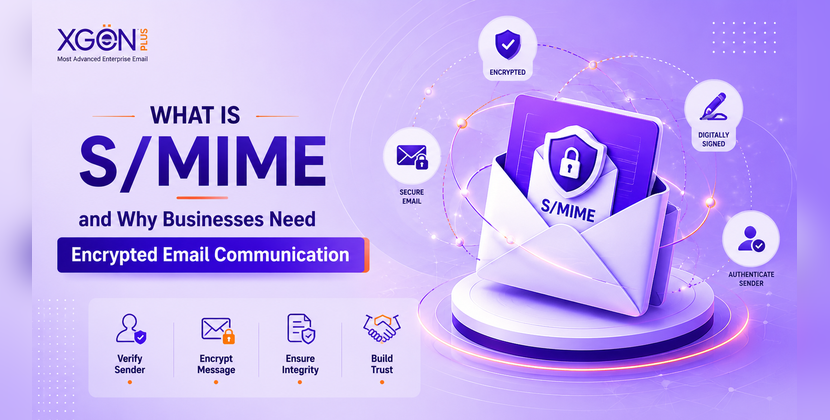
This is where S/MIME comes into the picture. S/MIME helps organizations protect email communications through encryption and digital signatures. It ensures that only intended recipients can access sensitive information while also verifying the authenticity of email senders. In this guide, we'll explore what S/MIME is, how it works, and why it is essential for modern business communication.
What Is S/MIME?
S/MIME, which stands for Secure/Multipurpose Internet Mail Extensions, is a widely adopted email security standard that enables encryption and digital signing of email messages. It uses cryptographic certificates to protect email content and verify sender identities, making email communication more secure and trustworthy.
As cyber threats continue to evolve, businesses need stronger protection than traditional spam filters and antivirus solutions alone. S/MIME addresses this challenge by ensuring that email content remains confidential and that recipients can verify the authenticity of messages they receive.
Organizations across industries use S/MIME to secure sensitive communications involving customer data, financial information, legal documents, healthcare records, and intellectual property. By implementing S/MIME certificates, businesses can strengthen email security and reduce the risk of email-based attacks.
How Does S/MIME Work?
S/MIME operates using Public Key Infrastructure (PKI), a security framework that relies on cryptographic key pairs. Each user receives a digital certificate containing a public key, while a corresponding private key remains securely stored with the certificate owner.
When a sender digitally signs an email, recipients can verify that the message genuinely came from the stated sender and has not been altered during transmission. This process helps establish trust and protects against spoofing attempts.
For encrypted emails, the sender uses the recipient's public key to encrypt the message. Only the recipient's private key can decrypt and read the content. This ensures that even if an email is intercepted, unauthorized parties cannot access the information contained within it.
Key Components of an S/MIME Certificate
Several components work together to make S/MIME secure and reliable. These elements create the trust framework that allows organizations to encrypt emails, authenticate senders, and verify message integrity.
Understanding these components helps businesses appreciate how S/MIME protects sensitive communications. Each component plays a unique role in ensuring that email messages remain secure throughout their journey.
Digital Certificate
A digital certificate serves as an electronic identity for an email user. It contains information about the certificate holder and their public key, allowing recipients to verify the sender's identity.
When an email is digitally signed, the certificate helps confirm that the message came from a legitimate source and has not been tampered with.
Public and Private Keys
Public and private keys are the foundation of S/MIME security. The public key is shared with others and is used for encryption and signature verification, while the private key remains confidential and is used for decryption and signing.
This cryptographic pairing ensures that sensitive information can only be accessed by authorized individuals.
Certificate Authority (CA)
A Certificate Authority is a trusted third party responsible for issuing and validating digital certificates. Before issuing a certificate, the CA verifies the identity of the applicant.
Because recipients trust the CA, they can confidently trust the certificates it issues.
Certificate Revocation List (CRL)
A Certificate Revocation List contains certificates that have been revoked before their expiration date due to compromise, misuse, or other security concerns.
Email clients can check the CRL to ensure that a certificate remains valid and trustworthy before accepting a signed email.
Benefits of S/MIME for Businesses
Businesses exchange large amounts of sensitive information through email every day. Without proper security controls, these communications can become targets for cybercriminals seeking to steal data or impersonate trusted individuals.
S/MIME helps organizations address these risks by providing encryption, authentication, and message integrity protection. These capabilities make email communication more secure while improving trust among customers, partners, and employees.
Protects Sensitive Information
Encryption ensures that confidential information remains private during transmission. Even if an email is intercepted, attackers cannot read its contents without the appropriate private key.
This is particularly important for organizations handling customer data, financial records, legal agreements, and proprietary business information.
Prevents Email Spoofing
Email spoofing occurs when attackers impersonate trusted senders to deceive recipients. These attacks often lead to fraud, malware infections, or credential theft.
S/MIME digital signatures help recipients verify sender identities, reducing the likelihood of successful impersonation attempts.
Ensures Message Integrity
Message integrity ensures that email content remains unchanged during transmission. If any modification occurs, the digital signature becomes invalid.
This allows recipients to detect tampering and trust that the information they receive is accurate and authentic.
Builds Trust with Customers and Partners
Verified and encrypted communications demonstrate a commitment to security and professionalism. Customers and business partners are more likely to trust organizations that take proactive measures to protect sensitive information.
This trust can strengthen business relationships and improve communication confidence.
Supports Regulatory Compliance
Many industries must comply with strict data protection and privacy regulations. Secure email communication can help organizations strengthen their compliance posture and reduce security risks.
For sectors such as healthcare, finance, government, and legal services, encrypted email communication is often an important component of broader security strategies.
S/MIME Digital Signatures vs Email Encryption
Many people assume that digital signatures and encryption perform the same function. While both are important components of S/MIME, they address different aspects of email security.
Understanding the difference helps organizations use these technologies effectively and maximize their email protection strategy.
Digital Signatures
Digital signatures focus on authentication and integrity.
Benefits include:
- Verification of sender identity
- Confirmation that content has not been altered
- Protection against email spoofing
- Increased trust in business communication
Email Encryption
Encryption focuses on confidentiality and privacy.
Benefits include:
- Protection of sensitive information
- Restricted access to authorized recipients
- Reduced risk of data breaches
- Stronger communication security
Organizations often use both digital signatures and encryption together to achieve comprehensive email protection.
S/MIME vs TLS: Understanding the Difference
S/MIME and Transport Layer Security (TLS) are both important email security technologies, but they serve different purposes. Businesses often mistakenly believe that TLS alone provides complete email protection.
TLS secures the connection between email servers while messages are in transit. However, once the email reaches a server, the content may no longer be protected by TLS.
S/MIME provides end-to-end protection by encrypting the actual content of the email. This means that even if a message is intercepted or accessed during storage, unauthorized users cannot read the encrypted information. For maximum protection, many organizations implement both TLS and S/MIME together.
Industries That Benefit Most from S/MIME
While every organization can benefit from secure email communication, certain industries handle particularly sensitive information and therefore require stronger protection measures.
For these industries, email encryption and sender verification help reduce security risks, maintain customer trust, and support compliance requirements.
Financial Services
Banks, insurance companies, and financial institutions regularly exchange confidential customer and transaction data.
S/MIME helps protect sensitive financial information from unauthorized access and cyber threats.
Healthcare
Healthcare providers frequently share patient records, medical reports, and treatment information.
Encrypted email communication helps strengthen data privacy and security practices.
Government Agencies
Government organizations often exchange confidential information between departments and external stakeholders.
S/MIME supports secure communication and reduces the risk of information exposure.
Legal Firms
Law firms handle privileged communications, contracts, and case-related documents.
Email encryption helps safeguard confidential legal information from unauthorized access.
Enterprises
Large organizations routinely share strategic plans, intellectual property, and internal communications.
S/MIME helps reduce the risk of data leaks and strengthens corporate security.
Risks of Sending Business Emails Without Encryption
Many organizations still rely on basic email security controls without encrypting sensitive communications. This creates opportunities for cybercriminals to intercept messages, impersonate trusted senders, or gain unauthorized access to valuable information.
The consequences of unsecured email communication can be significant. Businesses may face financial losses, compliance penalties, operational disruptions, and reputational damage following a successful attack or data breach.
These risks include:
- Business Email Compromise (BEC) attacks
- Email spoofing and impersonation
- Unauthorized access to confidential information
- Financial fraud and data theft
- Compliance and regulatory issues
- Reputational damage
Best Practices for Implementing S/MIME
Deploying S/MIME is only the first step toward securing email communication. Organizations must also establish policies and procedures to ensure certificates are properly managed and security controls remain effective.
Following best practices helps businesses maximize the benefits of S/MIME while reducing the risk of certificate misuse, expired credentials, or configuration issues.
Organizations should follow these best practices:
- Securely store private keys
- Renew certificates before expiration
- Verify certificate validity regularly
- Train employees on email security awareness
- Use S/MIME alongside SPF, DKIM, and DMARC
- Create policies for encrypted communications
How XgenPlus Supports Secure Business Email Communication
As cyber threats continue to target email systems, organizations need secure communication platforms that go beyond basic email functionality. Security, reliability, compliance, and data protection must be built into the foundation of business email infrastructure.
XgenPlus helps organizations strengthen their email security posture through secure business email solutions designed for enterprise communication. Combined with encryption technologies, authentication protocols, and administrative controls, businesses can better protect sensitive information and reduce email-related risks.
By adopting secure email practices and leveraging enterprise-grade email solutions, organizations can improve trust, support compliance initiatives, and safeguard critical business communications.
Conclusion
Email remains one of the most important communication tools in modern business, but it also remains a primary target for cybercriminals. Protecting sensitive information requires more than traditional security measures—it requires technologies that ensure confidentiality, authenticity, and message integrity.
S/MIME provides a proven framework for securing email communication through encryption and digital signatures. By implementing S/MIME, businesses can reduce security risks, prevent spoofing attacks, strengthen trust, and protect valuable information from unauthorized access.
As organizations continue to face evolving cyber threats, encrypted email communication is no longer optional. It is an essential component of a modern business email security strategy.
👉 Book a free XgenPlus consultation for secure business email